Here's the thing about overthinking sex
It's not a character flaw. It's your nervous system trying to keep you safe. The running commentary in your head—"Am I doing this right? Do they like this? How do I look right now? Should I be closer? Why aren't we more connected?"—is your brain attempting to monitor and control an experience that actually requires surrender.
The problem is that surrender and control can't occupy the same space. And when couples struggle with emotional distance, that overhead commentary gets louder, not quieter.
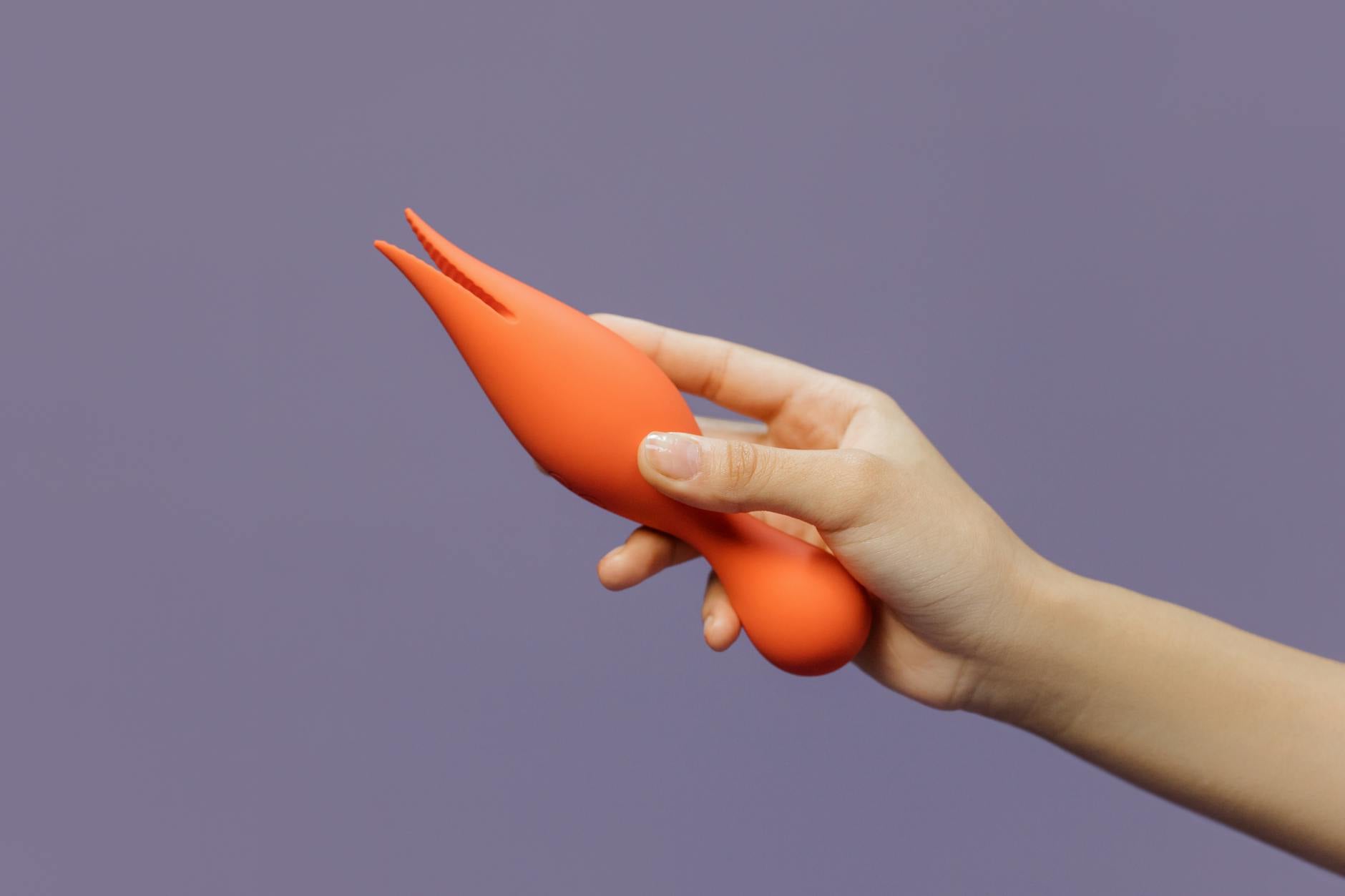
That's where a lemon clitoral vibrator changes the conversation. Not by adding another thing to worry about, but by giving your nervous system a concrete focal point that bypasses the narration.
Why your brain won't stop talking during sex
When emotional intimacy feels shaky, your body defaults to performance mode. You're running a constant reality check: "Is this working? Are they still attracted to me? Are we close enough?" The irony is that this vigilance is exactly what prevents the closeness you're trying to create.
My clients describe it as being inside the experience and watching it simultaneously. Some call it spectating. What's actually happening is your prefrontal cortex (the thinking brain) is working overtime while your limbic system (the feeling brain) is trying to power down for safety reasons.
Adding a lemon vibrator to this dynamic doesn't magically silence the overthinking. But it does redirect it. Instead of monitoring emotional connection, your attention snaps to physical sensation. That's not avoidance. That's called neurological traction.
When the clitoral suction sensation kicks in, especially the building intensity of the Lem's air-pulse technology, your brain has to choose: keep narrating, or feel this. Most nervous systems choose feeling.
The physics of presence
Here's what happens biologically when you introduce a lemon suction vibrator. The clitoris has roughly 8,000 nerve endings packed into a small area. When you apply sustained suction and gentle pulse patterns, you're creating a sensation that requires active processing. Your brain can't simultaneously narrate and track a building-wave sensation.
This isn't distraction in the negative sense. It's redirection. You're moving attention from "Is this okay?" to "What am I actually feeling?" That shift is the threshold between performance and presence.
If you're using the vibrator with a partner, something else happens too. You're giving permission to focus on your own pleasure without guilt. That permission alone softens the dynamic. Instead of monitoring their experience and yours simultaneously, you've externalized the source of sensation. Your partner can see you receiving pleasure without needing to provide it through effort alone.
That's profoundly connecting for most couples, because it removes the unspoken contract that one person's job is to generate the other's pleasure. You both get to be present together.
Practical setup when you're both in the room
Start with a conversation that has nothing to do with performance. Say this out loud: "I want to try using a clitoral vibrator together, not because something's wrong, but because I want to feel more present instead of in my head." That single sentence reframes the whole thing from "fixing a problem" to "deepening what we have."
Choose your position based on comfort, not what you think is sexier. If you're sitting between your partner's legs or they're beside you, the Lem works well because it's handheld and the shape accommodates different angles. You control the intensity. You control the timing. Your partner can touch you elsewhere, kiss you, make eye contact. The vibrator isn't the main event. It's the permission structure.
Start at pattern 1 or 2. The temptation is to jump to higher intensity thinking it'll be more exciting. It won't. Lower intensity actually requires more presence because the sensation is subtler. Your brain can't zone out on whisper-level stimulation the way it might on maximum rumble.
One important thing: if your brain is still narrating heavily, that's information, not failure. It means you need longer to warm up, or more conversation beforehand, or a different framing. Some couples find that lying down and using the vibrator for 10 minutes without any other sexual activity helps reset the nervous system first.
When sensation grounds you more than conversation
If you and your partner have been stuck in the same conflict loop for months or years, talking about it probably feels exhausting. Your nervous system might be tired of words. In those cases, a lemon clitoral vibrator becomes a different kind of language. It says: "I want to feel good, and I want you here while that happens." That's vulnerability without rehearsal. It's presence without explanation.
Many couples I work with report that using a vibrator together actually makes them want to talk more afterward, not less. When you're not performing, you're gathering data about what you actually like and what you actually feel. That data is gold for rebuilding emotional connection, because it's specific and real, not theoretical.
What to do if the narration doesn't quiet
Sometimes the thinking doesn't stop, even with a lemon vibrator involved. That usually means one of a few things:
You need more time warming up. Move away from the vibrator and spend 15 minutes just touching and kissing. Let your nervous system downshift before you add sensation.
Your body is holding tension somewhere. A tight pelvic floor, clenched jaw, or shallow breathing all keep you locked in performance mode. Breathing exercises before sex actually work. Five minutes of slow, deep breathing genuinely resets your nervous system.
You're not actually ready to be present yet. That's okay. Some couples need to do other work first. Therapy, conversations about trust, time apart to build anticipation. The vibrator isn't a substitute for that work. It's a tool for the couples who are ready.
The Lem won't fix a broken relationship. But for couples with solid foundations who are stuck in their own heads, it's often the thing that tips the scales back toward feeling.
The permission piece
Most of the work here isn't mechanical. It's psychological. Using a clitoral vibrator during partnered sex is giving yourself explicit permission to center your own pleasure. That permission is radical for people conditioned to monitor and manage their partner's experience at the expense of their own sensation.
Your partner gets to see you fully committed to feeling good. They get to witness your pleasure instead of generating it. For many couples, that's the first time they experience sex as something they share rather than something one person performs for the other.
That shift alone changes the intimacy.
Frequently Asked Questions
Can using a vibrator with a partner actually improve emotional connection?
Yes, but only if the foundation is there. If you're using it to avoid conversation or to patch over deeper trust issues, it won't work. But for couples who are committed to each other and just stuck in performance anxiety, a lemon clitoral vibrator often becomes the bridge back to presence. I've worked with couples who couldn't make eye contact during sex until they introduced a vibrator, because suddenly the narration quieted enough for them to actually be with each other.
What if my partner feels threatened by a vibrator?
That's normal. Many people worry that a toy means their partner isn't satisfied. Frame it clearly: "This isn't about you not being enough. It's about me quieting my anxious thoughts so I can actually feel you." The Lem is a clitoral vibrator designed to work with partnered sex, not as a replacement. Some couples find it helpful to research together first, or to look at it as a joint decision rather than something one person is introducing.
Should we use the vibrator every time or just sometimes?
It depends. Some couples integrate it regularly. Others use it when they're feeling disconnected or when they need to reset their nervous systems. There's no rule. I'd suggest trying it a few times and noticing what actually happens to your sense of connection afterward. That data tells you whether this is a regular tool or an occasional reset.
How long should a session take when using a lemon vibrator together?
Don't set a timer. Most couples I work with spend 15 to 25 minutes total, including warm-up, vibrator use, and whatever comes after. But the real marker isn't time. It's whether you both feel more present with each other than you did before.
What if one person wants to use it and the other doesn't?
Start there. That resistance is data. Ask why. Is it insecurity? Discomfort with vibrators generally? Feeling like the relationship is already broken if a toy is needed? Those are three different conversations with three different solutions. Don't push. Curiosity works better than persuasion with intimacy stuff.
Can we use a lemon vibrator if we don't live together or see each other often?
Absolutely. Long-distance or less-frequent couples often benefit because when you do have time together, the vibrator becomes part of a deliberate, focused experience. There's less chance to fall into autopilot. The Lem's relatively quiet design also makes it more practical for different living situations.
Here's what actually matters
Using a lemon clitoral vibrator together isn't about technique. It's about redirecting your nervous system from performance monitoring to actual feeling. When you quiet the narration, you make space for presence. And presence is what reconnects couples.
Start the conversation before you start the vibrator. Be honest about what you're trying. Give yourself permission to feel good without guilt. And notice afterward what's different, not just during sex, but in how you touch each other and look at each other in regular life.
That's the real intimacy. The vibrator just helps you get there.
If you want to explore this more deeply or work through blocks to intimacy in your relationship, reach out. I work with couples ready to move past their own heads and into real connection.
Related reading
For more on using lemon vibrators in different relationship contexts, check out our guides on rebuilding intimacy after relationship conflict and better orgasms with a new partner. And if your overthinking is tied to medication or body changes, this piece on arousal after 40 might help frame the bigger picture.