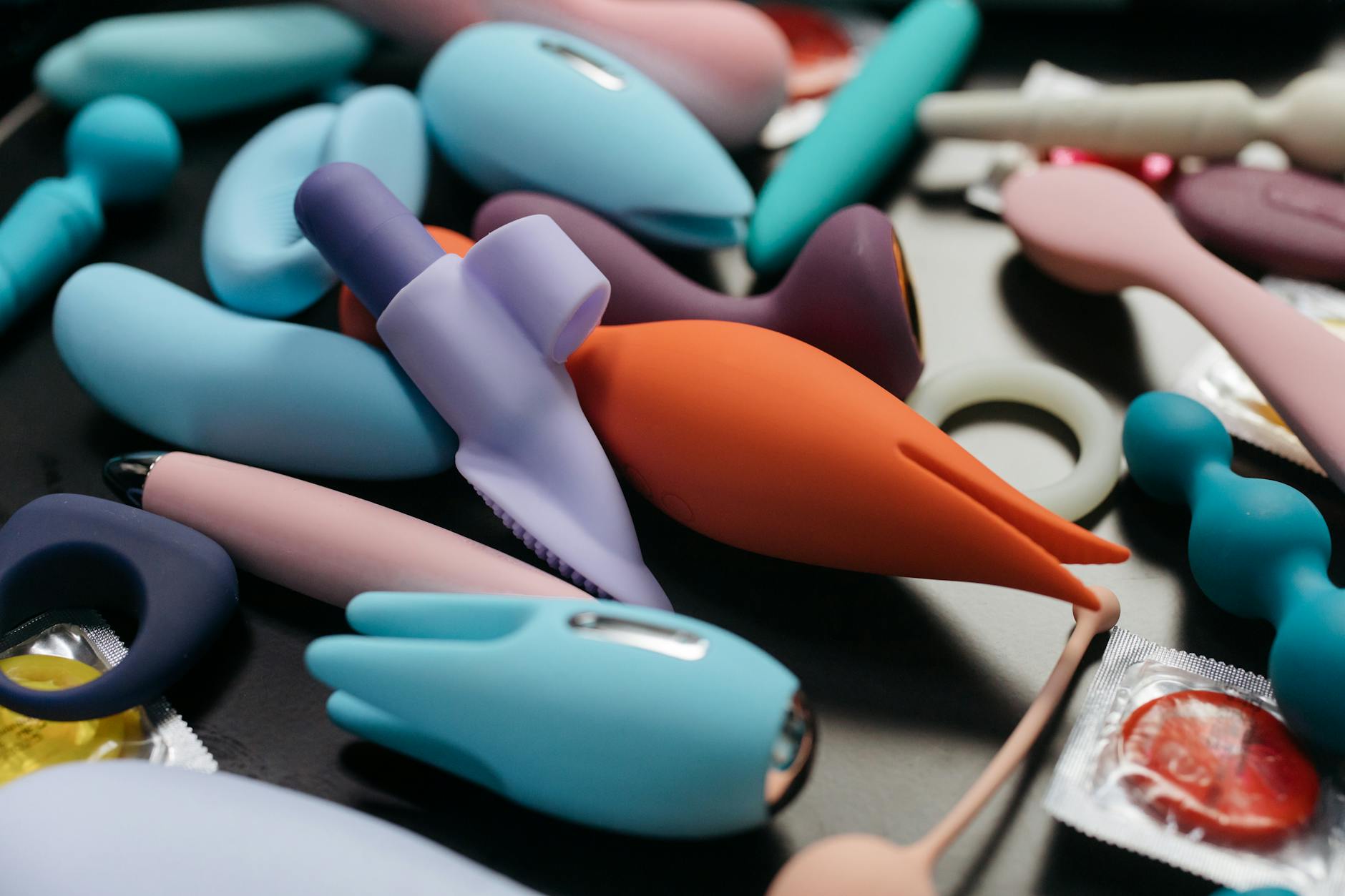
Let's talk about the elephant in the bed
You can come alone. You can come easily, predictably, sometimes multiple times. Then your partner walks in the room and suddenly your body forgets how to do the one thing it's been doing perfectly fine by itself for years. This is not a medical problem. It is not a sign of low desire. It is one of the most common relationship friction points that nobody talks about, and it's wildly fixable.
Here's what's actually happening: your nervous system has learned that pleasure with a witness is dangerous. Not dangerous like physically, but dangerous to your sense of safety, control, and self-image. The performance anxiety is real. The shame is real. And both of those things turn off your orgasm switch faster than a cold shower.
Why your body clams up when they're there
There are three overlapping reasons orgasms become harder with a partner present, and understanding them changes everything.
The attention split. Solo, you get to direct all your mental energy toward sensation. With a partner, your brain is now also monitoring their face, their breathing, whether they're enjoying themselves, whether you're taking too long, whether you're doing this right. That's a cognitive load that directly competes with arousal. Orgasm requires focus. Performance requires monitoring. Your brain can't do both simultaneously.
The fear of being seen. Even in deeply loving relationships, there's often an unconscious worry that if your partner truly sees your pleasure face, your sounds, your rawness, they'll be turned off or judge you. Women especially are socialized to be "good in bed," which translates to quiet, controlled, and considerate. Letting your partner witness you having an orgasm means abandoning that control, and that feels unsafe.
The conditioning from early sexual experiences. If your first sexual experiences involved pressure, rushing, or someone's impatience, your body may have learned that your pleasure takes second place. That pattern doesn't disappear just because you're now with someone kinder. Your nervous system still remembers.
None of these are character flaws. They're survival strategies that made sense at some point.
How lemon clitoral vibrators shift the dynamic
This is where it gets interesting. Introducing a lemon vibrator (or any quality clitoral vibrator) into partnered sex changes the conversation from "Why can't you come?" to "How can we make this work together?"
Here's what happens physically. A lemon vibrator delivers consistent, powerful stimulation to the clitoral area without requiring your partner to do anything right or wrong. You're not waiting for the perfect touch. You're not worried about their arm getting tired. You're not dependent on their technique. That removes a massive source of anxiety.
But here's what happens psychologically, and this is the real game-changer: introducing a toy signals that sex is collaborative, not performative. When you hand your partner a toy or use one together, you're saying "This is about my pleasure, not about proving anything." That permission often unlocks the relaxation your nervous system needs to actually let go.
Many couples find that using a lemon clitoral vibrator together creates a kind of shared responsibility for pleasure instead of the old "my orgasm is my responsibility, your pleasure is your job" split. That rebalancing is huge.
The specific way to introduce this without awkwardness
Timing is everything. Don't introduce a toy during sex when things are already pressured. That's adding a tool to a system that's already tense.
Instead, bring it up outside the bedroom. When you're both calm and clothed, say something like: "I've noticed I feel relaxed when I'm alone, but when you're there, my brain goes into overdrive. It's not about you. It's about me. And I think using a toy together might actually help me feel safer and more present. Want to try it?" That's honest, collaborative, and it frames the toy as a solution to a real problem, not a replacement for them.
When you do introduce it, start simple. The first time, you might use the lemon vibrator on yourself while your partner is just present and engaged. No pressure for them to do anything. The goal is for your nervous system to learn that you can be fully witnessed and still come. That's a powerful recalibration.
Once you've done that a few times, your partner can take a more active role. Maybe they hold the toy. Maybe they use it on you. The exact mechanics matter less than the fact that you're both in it together, and the pressure is off you to perform.
What changes when you stop trying to be perfect
One of the biggest shifts I see in couples who work through this is a sudden permission to just be human during sex. Your orgasm doesn't need to be beautiful or quiet or fast. It can be messy and loud and take thirty minutes. When you're using a clitoral vibrator with a partner, there's no ambiguity about what's happening. You're not subtly signaling for them to adjust. You're not managing their experience. You're just feeling what you feel.
That sounds simple, but it's revolutionary in relationships where sex has been managed or negotiated or performed for years. Once your partner sees you come hard with a vibrator, the mystique of your pleasure disappears. You're not mysterious. You're just human. And most partners find that incredibly hot.
The other thing that shifts is curiosity. When a toy enters the picture, it gives couples something to actually experiment with. Different patterns, different intensities, different positions. That experimentation keeps sex fresh in a way that "try harder to come on your own" never does.
The conversation to have afterward
After you use a lemon vibrator together, there's usually a moment of awkwardness. That's normal. But don't just move on. Talk about it.
Not a clinical debrief. But something like: "That felt different. I was actually present the whole time instead of in my head." Or "I liked feeling you engaged with what was happening." Simple observations that help your partner understand what shifted.
If your partner is nervous about toys (many men worry a vibrator will replace them), this is your chance to be clear. "I can feel you here. The toy is just helping my body catch up to what I actually want." Reassurance matters. Most partners worry less about the toy and more about whether you still want them. Tell them.
The research on this is clear. Couples who incorporate toys into their sex life report higher satisfaction, more orgasms, and less performance anxiety across the board. It's not magic. It's just permission and better tools.
Specific patterns that help the most
If you're new to using a lemon vibrator with a partner, these patterns tend to work best.
Pattern one: Solo warm-up, then partner involvement. You use the vibrator on yourself for five to ten minutes before your partner touches you at all. This gets your nervous system out of performance mode and into pleasure mode. Once you're actually aroused, they can engage however feels right. You're starting from a place of physical relaxation instead of mental anxiety.
Pattern two: They use it on you during foreplay. Your partner controls the toy while you focus on sensation. This removes the "right way to use this" pressure. Some women find this less triggering because they're not responsible for making it work. They're just receiving.
Pattern three: Partner inside you, you or them using the vibrator on your clitoris. This combines penetration with clitoral stimulation, which is actually how most women have their strongest orgasms with a partner. The vibrator isn't replacing anything. It's filling a gap that penetration alone doesn't address. That's factual, not a criticism of your partner.
Start with whichever feels least scary. You can always shift to another pattern later.
When to get a little help from a professional
If you've tried introducing toys and your body still won't cooperate, that's worth exploring with a sex therapist or your doctor. Sometimes orgasm difficulty with a partner is connected to trauma, anxiety disorders, or past relationship patterns that need actual treatment, not just a better toy.
There's no shame in that. If your nervous system has learned to go into lockdown mode when someone is watching, a trained therapist can help you rewire that response. That's what they're for.
But for most people, the combination of a quality clitoral vibrator, an honest conversation with your partner, and permission to stop performing changes everything. You don't need to fix your body. You need to fix the system that's telling your body not to feel.
The bigger picture
Orgasms with a partner don't have to be complicated or rare or something you're secretly ashamed about. They can be reliable, hot, and collaborative. It starts with one honest conversation and the willingness to try something new. A lemon vibrator is just the tool. The real change happens when you decide that your pleasure in front of another person is not just acceptable. It's essential.
People also ask
Can using a vibrator with a partner make you dependent on it?
No. Dependence happens when toys are a substitute for intimacy or connection. But when a vibrator is a bridge to better orgasms and more communication, it's the opposite of dependence. You're actually learning your body better and communicating more clearly with your partner. That's the definition of healthy. Some women find they can come faster with a toy present, but they can still orgasm without it. The toy just removes the friction.
What if my partner feels threatened or insecure about toys?
That feeling is often about inadequacy, not about the toy. He might think that needing a vibrator means he's not doing something right. Your job is to be clear: a vibrator isn't a commentary on his performance. It's a practical acknowledgment that your clitoris and his fingers or penis are different tools for different jobs. You don't use a fork to eat soup even if you love the person holding the spoon. Same logic. If insecurity persists after a few conversations, couples therapy helps. A professional can reframe toys as collaborative rather than threatening.
How do lemon vibrators specifically help with this issue?
Lemon vibrators and lemon clitoral vibrators are designed with suction and pulsing patterns that mimic the sensation that actually triggers orgasm for many people. Unlike traditional vibrators, they deliver focused stimulation without overwhelming intensity. That specificity means you need less mental effort to figure out "is this working?" and more ability to just feel. The consistency also removes the variable of your partner's technique, which is a huge source of performance anxiety for many women.
Should we use a vibrator every time we have sex?
Absolutely not. Once your nervous system learns that you can come with a partner present, you'll probably find you don't need the vibrator every single time. But lots of couples keep it in the rotation because it takes the pressure off and makes sex more varied. Think of it like cooking. You don't need a special knife for every meal, but having one for specific dishes makes cooking easier and more enjoyable. Same here.
What if I come really quickly with a vibrator but slowly without it?
That's actually good news. It means your body knows how to have an orgasm with a partner. It just needed the nervous system pressure reduced first. As you use the vibrator over time and your brain learns that being witnessed while coming is safe, you may find that you don't need as much intensity or consistency. Your body's natural response can catch up once the psychological block is gone.
Is there a best position for using a lemon vibrator with a partner?
Positions where you're facing each other tend to work best because they reduce the performance anxiety. You can see each other's faces, which feels more connected than positions where you're not looking at each other. Woman-on-top or spooning are classics for a reason. They let you control depth and intensity while your partner can use a vibrator or be fully present. From there, you can experiment based on what feels good for your specific body and relationship.
Ready to try something different
If orgasms with your partner have felt impossible or you're tired of the performance, you don't need to white-knuckle through it anymore. The conversation is easier than you think, the tool is simpler than you think, and the relief is more immediate than you think. Start with that honest talk outside the bedroom. The rest builds from there.
If you have questions about how to navigate this with your specific relationship, our team at Hello Nancy's Lemon is here to help. We've written guides on how to introduce lemon vibrators without feeling awkward in a new relationship and how to talk to your partner about toys when they're skeptical. You can also reach out directly if you want to chat through your specific situation. That's what we're here for.