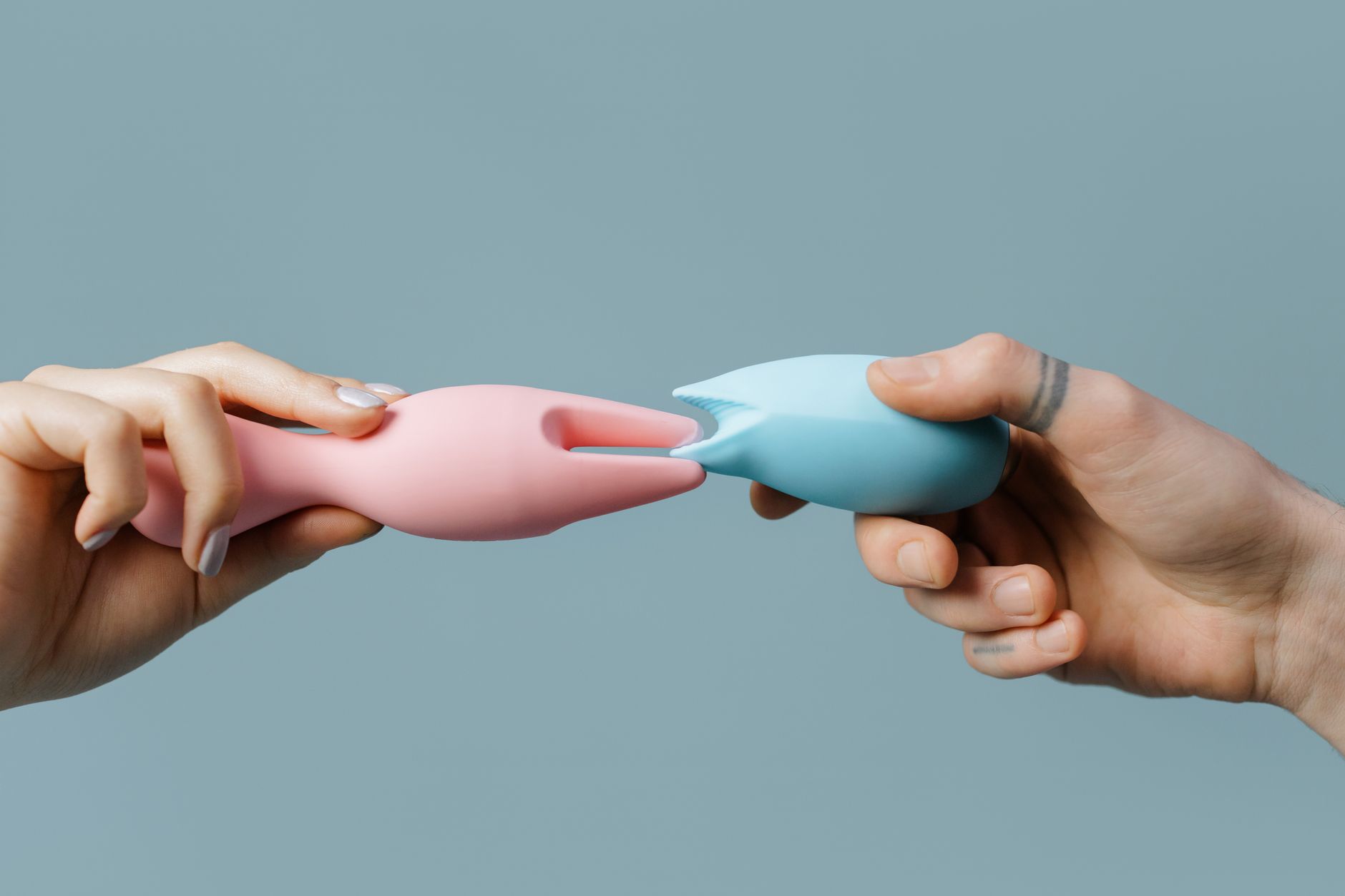
Let's name the fear first
Your partner thinks a vibrator will replace them. Or diminish what you already have. Or turn sex into something performative instead of intimate. These aren't crazy thoughts. They're rooted in a real misunderstanding about how pleasure works, what intimacy actually is, and what lemon vibrators do in the bedroom.
I've worked with hundreds of couples where one person wanted to explore clitoral vibrators and the other person felt threatened. The conversation usually goes the same way: defensiveness, assumptions, and then, eventually, a shift. Once you understand what's really happening physiologically and emotionally, the resistance often dissolves.
Why the resistance makes sense (even if it's based on a myth)
Here's what your partner might actually be thinking. "If she needs a vibrator, does that mean I'm not enough?" Or "Won't using a lemon vibrator make her unable to orgasm with me anymore?" Or "This feels less intimate than when it's just us."
All of these come from the same root belief: that your pleasure is supposed to be about them. That intimacy means you should orgasm primarily from penetration or partnered stimulation. That introducing a tool means introducing a third party into something that should be just between you two.
None of that is how bodies work. But I understand why he or she believes it. We're taught that narrative from a young age.
What actually happens when you use a lemon vibrator together
First, the physiological part. A lemon clitoral vibrator like the one from Hello Nancy's Lemon doesn't train your body to need vibration or make you dependent on it. You can't become "addicted" to sensation in a way that breaks your capacity for partnered touch. The science is clear on this: the clitoris has about 8,000 nerve endings, and they don't recalibrate based on input method.
What a lemon vibrator does is wake up sensation. It reaches nerve clusters that partnered stimulation alone might not, or might reach more slowly. It can help you orgasm faster, which many couples interpret as "better chemistry" rather than "that toy ruined us."
Second, the emotional part. When a partner watches you experience pleasure, something shifts in the room. Shame decreases. Curiosity increases. If your partner is holding the vibrator, they're directly involved in your pleasure. They're not being replaced. They're being asked to participate differently.
The conversation that actually works
Don't lead with the vibrator. Lead with the desire.
Instead of "I want to try using a lemon vibrator because you're not doing it right," try "I've been curious about what my body can do, and I think it could be really hot if we explored that together." That's honest, it's about you (not them), and it frames the tool as expansion, not replacement.
Then, when they ask the inevitable question ("Am I not enough?"), you answer the actual question. "You are absolutely enough. This isn't about you being insufficient. It's about me wanting to feel different sensations, and I want to feel them with you." This is where you separate their insecurity from the actual request.
If they stay resistant, ask what the real concern is. Sometimes it's not about being replaced. Sometimes it's about loss of control, or fear of your sexual autonomy, or anxiety about not being "normal." Listen. You can't address the real fear if you're only debating the vibrator.
How to actually use it together (so it feels intimate, not clinical)
Start with touch. All the touch you normally have. Then introduce the lemon vibrator as an extension of that, not as a replacement. Your partner can hold it. They can watch. They can keep their hands on you while it's happening. The goal isn't to hand off pleasure to a device. It's to fold a new sensation into something you already share.
Timing matters. If your partner uses it on you during foreplay, before penetration, they're involved in building your arousal. You're both working toward something together. That's not less intimate. That's collaborative.
Or use it together during partnered sex. Many people find that a lemon sucker or clitoral vibrator intensifies sensation during penetration in a way that makes the whole experience richer for both partners. Your partner gets to feel you respond more intensely. That's not threatening. That's hot.
The longer conversation underneath
If your partner is deeply uncomfortable, this might not really be about the vibrator. Couples who have felt disconnected from each other sometimes resist toys because they sense something is already off in the relationship. If that's the case, the vibrator isn't the problem. The disconnection is.
But for couples with solid foundations who just have this one friction point, introducing lemon vibrators together can actually deepen things. You're saying "I want you to know my body better." You're creating novelty, which relationships desperately need. You're prioritizing your pleasure without apologizing for it, which is attractive.
Some partners come around immediately once they see how it works. Others need time. They might need to watch a few times before they want to touch it. They might need reassurance in between sessions. That's fine. Change takes a minute.
When to push and when to accept the no
If your partner is fundamentally opposed and it's causing real tension, you have to decide what that means for you. You deserve pleasure. Full stop. But you also deserve a partner who respects your body's needs.
Many couples find middle ground here. Maybe your partner isn't comfortable with lemon vibrators during partnered sex, but they're okay with you using one alone. Maybe they're fine with a different kind of toy but not the one you first mentioned. Maybe they need education before they're ready. That's all workable.
What's not workable is repeated shaming about wanting to feel good. If that's what's happening, you might benefit from talking to a couple's therapist who specializes in sexuality. This issue often points to bigger beliefs about control, autonomy, and trust that go beyond the vibrator itself.
What changes once he or she gets it
Most partners who come around report something surprising: they enjoy partnered sex more once vibrators enter the picture. Your orgasm becomes reliably achievable, which lowers performance anxiety for both of you. You're more relaxed. You're more focused on the connection instead of "am I ever going to finish?" That shift alone changes intimacy.
And the psychological thing is real. There's something deeply connecting about your partner saying, "I want to see you feel this." It's not "I'm replacing you." It's "I want to expand what we do together."If your partner has been dismissive of your pleasure, or if they've never really asked what would feel good to you, introducing a lemon clitoral vibrator might be the catalyst for a bigger conversation about what you both actually want in the bedroom.
Practical logistics that help
Let him or her choose the toy with you, if they're willing. HelloNancy's Lemon comes in a few versions, and if your partner gets to see the options and participate in the choice, ownership shifts. It becomes "ours" instead of "something you're forcing on me."
Start very small. Not during your most vulnerable moment. Maybe use it while you're already in a good mood, already affectionate, already connected. Set the frame: "I want to try something new tonight. I think it'll feel really good, and I want you to watch." No pressure. Just invitation.
And honestly, if you can find humor in it, do. If the conversation has been heavy, lightness helps. "Let's be weird together" is a better frame than "I need you to understand my sexual needs."
When acceptance becomes enthusiasm
Some of the most connected couples I've worked with use lemon vibrators regularly. They've moved past the fear stage into curiosity. They've realized that prioritizing pleasure is actually a way of prioritizing each other. That expanding what you do together isn't a threat. It's an adventure.
Your partner's resistance isn't permanent. It's usually just the gap between where they are and where they need to be. Your job isn't to convince them. Your job is to stay clear about what you want, to make space for their fears, and to keep inviting them into something better. Most of the time, they'll follow.
FAQ
Will using a lemon vibrator make me unable to orgasm with my partner without it?
No. Your nervous system doesn't recalibrate based on one source of stimulation. The clitoris has thousands of nerve endings, and they respond to many different kinds of touch. Vibration just reaches certain nerves efficiently, but that doesn't deactivate your ability to respond to other forms of touch. Many people use lemon vibrators sometimes and have partnered orgasms without them other times. They're a tool, not a dependency.
What if my partner refuses to even talk about it?
Start smaller. You don't need his or her permission to use a lemon vibrator alone. If they refuse to discuss it at all, that might point to a bigger issue around sexual autonomy in your relationship. A couples therapist can help open that conversation without vibrators becoming the battleground. Sometimes the resistance is really about control, and that's worth addressing separately.
Can I use a lemon clitoral vibrator if my partner is present but doesn't want to participate?
Absolutely. You can use a vibrator during partnered sex without them touching it or even watching closely. Many people find that using one while their partner is inside them intensifies the experience for both of them, even if the partner isn't directly involved in the vibrator part. Presence and participation aren't the same thing.
How do I bring this up without making my partner feel inadequate?
Frame it as expansion, not replacement. "I've been curious about what my body can do," not "You're not satisfying me." And mean it. If you're genuinely interested in exploring sensation with your partner involved, that's a totally different conversation than "I need something you're not providing." The first opens doors. The second triggers defense.
What if my partner wants to use a lemon vibrator on themselves?
That's beautiful. Some partners feel more comfortable when they're in control of the tool. If he or she wants to hold the lemon vibrator and use it on you, that's not less intimate. That's them participating. Encourage it.
Is it normal for partners to be threatened by toys?
Completely normal. You're taught that sex is supposed to be partnered and penetration-focused, and anything else is weird or unnecessary. Add in performance anxiety, and it's easy to see why someone might feel threatened by something that makes orgasm more reliable. It doesn't mean your partner is insecure or broken. It means they're working with outdated information. You can help update that together.