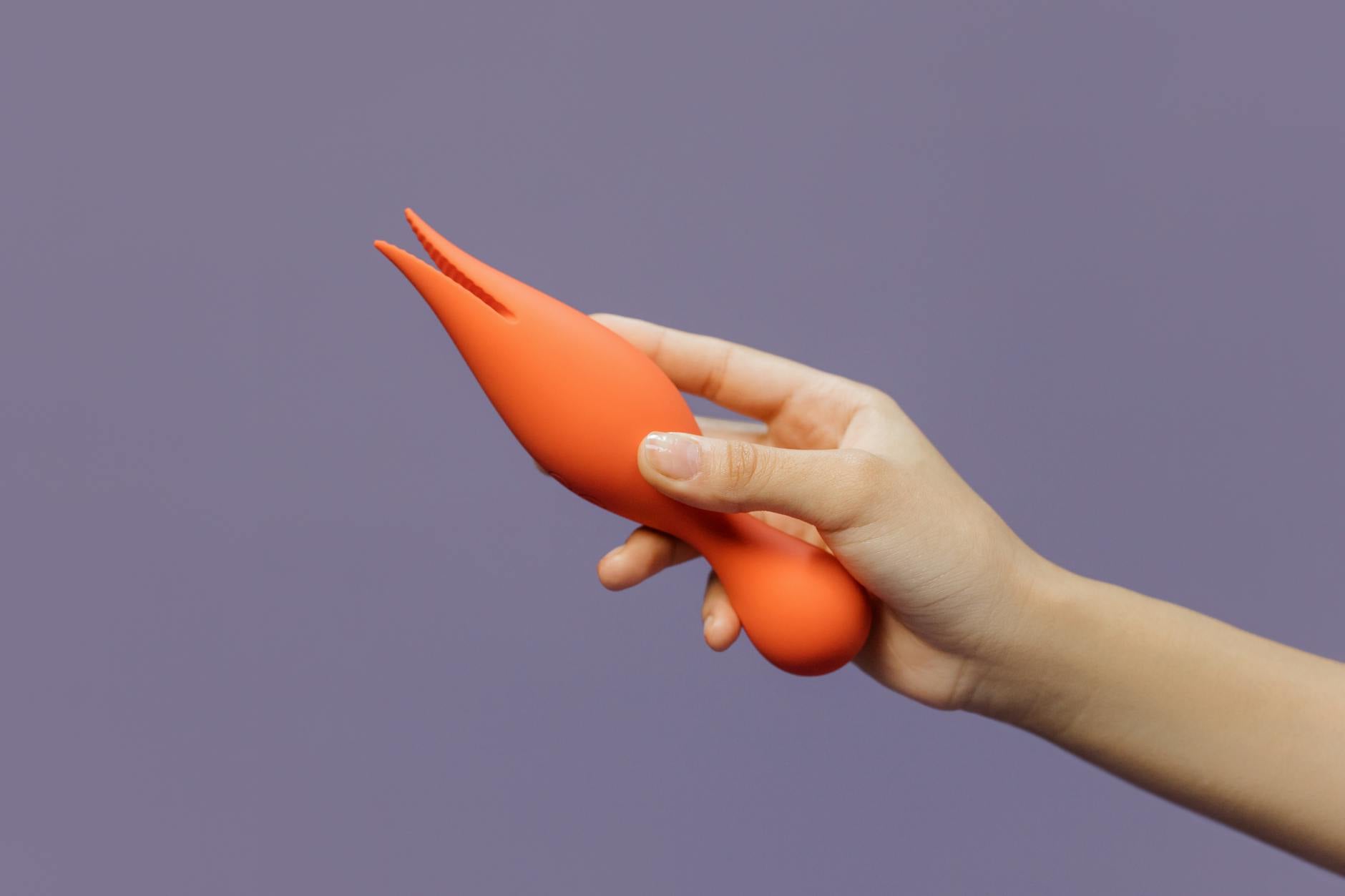
Here's what most people don't expect
You switched birth control pills. Maybe your old prescription ran out. Maybe your doctor suggested a different formulation. Maybe you wanted to try something with fewer side effects. Then you picked up your lemon vibrator for solo time and thought, "Wait, something's off." The sensation feels muted. Arousal takes longer. That intense buildup you counted on feels blunted, like someone turned down the volume.
You're not imagining it. Birth control pills reshape how your nervous system and hormones interact with pleasure. The Lem and other lemon clitoral vibrators work best when your body's wiring is firing correctly, and hormonal shifts can absolutely change that equation.
How birth control actually alters sensation
Birth control pills work by flooding your system with synthetic hormones, primarily estrogen and progestin. This suppresses your natural hormone cycle, which is the whole point. But here's what doesn't get discussed: those synthetic hormones don't work exactly like your body's own estrogen and progesterone.
Three main things shift when you start a new pill.
First, blood flow changes. Estrogen affects how much blood flows to your genitals. Different pill formulations have different hormone doses. A lower-dose pill might reduce genital blood flow slightly, which means less engorgement, less sensitivity to vibration, and a slower arousal response. You might need 10 minutes to warm up instead of 5.
Second, lubrication shifts. Estrogen supports natural vaginal lubrication. Most modern pills maintain decent lubrication, but switching formulations can create a dip. You notice this most when using external vibrators like the Lem, which rely on the tissue having enough moisture to respond fully to suction.
Third, your nervous system recalibrates. Progesterone, especially the synthetic versions in pills, can dull sensory perception. It's not permanent. It's your nervous system adjusting to the new hormonal environment. Some people describe it as feeling "muffled." Others say vibrations feel less intense, or orgasms take longer to build.
Why the first three months matter most
Your body doesn't adjust to a new pill overnight. The first three months are a transition period where hormone levels stabilize and your nervous system learns the new baseline. During this window, it's completely normal for pleasure to feel different or muted.
The adjustment usually stabilizes by month four. But that doesn't mean you have to white-knuckle through three months of unsatisfying lemon vibrator sessions.
What to adjust on your end
Extend your warm-up time. If you normally spend 5-10 minutes arousing yourself before introducing your lemon clitoral vibrator, add another 5-10 minutes. This isn't a failure. Your nervous system just needs longer to activate under the new hormonal baseline. Think of it as letting your body catch up.
Start at lower intensity. If you usually run the Lem at pattern 5 or 6, begin at 2 or 3 and work up slowly. You might find that mid-range patterns feel more satisfying than maxed-out intensity during this adjustment period. This isn't permanent, just a way to work with your body's current responsiveness rather than against it.
Use lubrication even if you don't usually. A good water-based lube makes a measurable difference when estrogen levels are in flux. It sounds minor, but the suction mechanism of the lemon sucker style vibrators depends partly on tissue texture and moisture. Adding lube removes one variable and lets you focus on what your nervous system is actually capable of.
Change your mental setup. This one's invisible but powerful. If you approach solo time expecting it to feel like it did on your old pill, you'll spend the session frustrated. If you approach it as exploring what your body feels like right now, you might discover different kinds of pleasure. Some people find that once they adjust, their orgasms feel deeper or more full-body, even if they take longer to reach.
The specific pills that tend to cause the biggest shifts
Not all birth control pills affect sensation equally. Pills with higher progestin loads (like Yaz, Yasmin, or some formulations of Levora) are more likely to dull sensation because progestin suppresses arousal in some people. Switching to these from a lower-dose pill often triggers the exact scenario you're experiencing.
Conversely, lower-dose formulations or pills with less androgenic progestins (like norgestimate or levonorgestrel at low doses) tend to have less impact on sensation. If your doctor switched you to one of these, you might actually feel improved sensation within a few weeks as your body adjusts downward.
Did your doctor give you the specific name of your new pill? If you're experiencing significant sensation changes, it's worth having a follow-up conversation. Not to switch away immediately, but to get clarity on the hormonal profile and whether a different formulation might work for your body.
When it's not the pill (and when it might actually be)
Birth control shifts sensation. It doesn't cause desire loss on its own, though stress hormones (cortisol) absolutely do. If you're starting a new pill during a stressful period—new job, relationship tension, financial pressure—your dampened pleasure response might be 30% pill and 70% stress.
Similarly, if you're also starting new medications (antidepressants, antihistamines, blood pressure meds), those compounds layer on top of what your birth control is already doing. Isolating the pill as the sole culprit might miss the bigger picture.
However, if you switched birth control and noticed sensation changes within days or weeks, the pill is almost definitely the driver. That timeline is too fast for anything else to be responsible.
How your partner fits into this
If you're with a partner, communication matters more during this adjustment than it does in most scenarios. "I'm adjusting to a new pill and my body's responding differently" is useful information. It's not a referendum on attraction or desire. It's a biological fact.
Many people try to hide the sensation shift from a partner, assuming they should "power through" and perform normally. That backfires because you end up tense, frustrated, and less present. Your partner likely notices the tension before they notice anything about sensation. Being straightforward actually deepens trust.
If you're exploring lemon vibrators together, this is also an opportunity to expand the toolkit. Maybe using the Lem during partnered sex offers sensation your body wasn't delivering on its own right now. Maybe slowing down and focusing on extended foreplay works better during the adjustment period. These aren't compromises. They're adaptations.
When to reach out to your doctor
If sensation dampening lasts beyond three months, talk to your prescriber. It might mean the formulation truly isn't working for your body, and a switch could be genuinely helpful. Some people do better on different pills. That's not a personal failure. It's biology being specific.
Also mention if other side effects show up alongside sensation changes. Weight gain, mood shifts, persistent headaches, or breast tenderness alongside arousal changes can all point to a formulation that's not aligned with your body.
The adjustment you're actually making
Starting a new birth control pill and noticing your lemon clitoral vibrator feels off isn't a red flag. It's your body recalibrating under new chemistry. The Lem and other quality clitoral vibrators are sensitive instruments. They respond to the full complexity of your arousal system. When hormones shift, that whole system shifts, and sensitive tools like these pick up on it immediately.
This is also why patience matters. In three months, once your body settles into the new hormonal baseline, you'll have a much clearer sense of whether this pill genuinely works for you or whether a different formulation might serve you better.