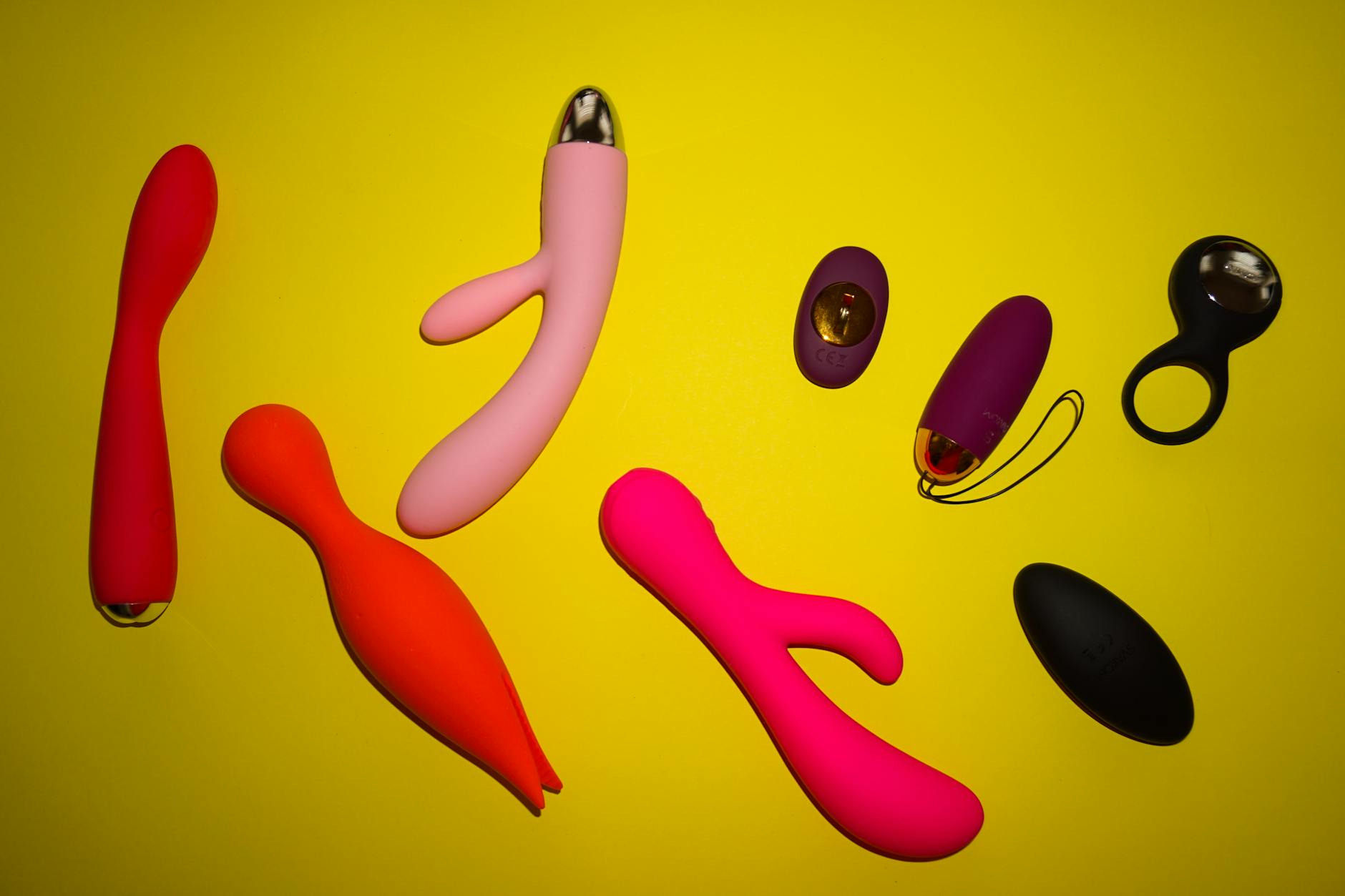
How Lemon Vibrators Help Couples Reconnect After Life Changes
Let's be real. When life happens—kids, work stress, aging parents, burnout—sex stops happening first. It's not dramatic. It just slowly vanishes from the calendar until neither partner mentions it anymore.
Here's the contradiction nobody talks about: the couples who feel most distant are often the ones who need touch the most. But restarting intimacy after a gap feels loaded. You can't just flip a switch. One partner worries they're pressuring the other. The other worries they've "failed" at desire. And both of you sit in silence thinking nobody understands.
Lemon vibrators, specifically the air-pulse kind like Hello Nancy's lemon sucker design, are quietly becoming a doorway back in for couples. Not because they're magic. Because they remove the performance pressure that killed desire in the first place.
Why couples avoid the conversation
After 15 years working with couples, I've noticed a pattern. The conversation about sex dying in a relationship never actually happens. Instead, you get hints, jokes, deflections, resentment masquerading as tiredness.
Why? Because sex is the last frontier of vulnerability for most people. You can fight about money and forgive. You can disagree about parenting and move on. But admitting that sex matters to you—and that its absence is painful—feels dangerous. It sounds like: "I've failed you. I'm failing myself. We're broken."
It sounds that way because that's how the culture frames it. Sex stops equals desire dies equals the relationship is over. Except that's not true. Sex stops for the same reason the kitchen remodel stops—life gets in the way. But unlike the kitchen, nobody says, "Yeah, we've been too busy to renovate."
The gap between desire and action
Here's what I see in my practice. One partner (often the person with a vulva, though not always) has desire still alive but dormant. The other partner has anxiety about rejection or fear of bothering them. Both sit in this gap where nothing happens, and the gap gets wider.
A lemon vibrator changes the frame. Suddenly you're not trying to resurrect some lost version of yourselves. You're inviting something new into the space. And novelty is neurologically rewarding—it signals safety. This is different from what stopped working. It's not about whether you still love each other. It's about asking a question together instead of hiding from one.
How to actually introduce the idea
Don't surprise your partner with a vibrator. That's not a gift—that's a conversation starter that skips the conversation.
Start here: "I've been thinking about us. Not in a blaming way. Just realizing that we've let physical intimacy slide, and I miss it. I miss you. And I think it's worth figuring out how to come back to that together."
That takes maybe 10 seconds and opens a door. Their response might be defensive, relieved, sad, or match your energy exactly. Let them respond. Listen without fixing.
Once you're both on the same page that you want to reconnect, you can say something like: "I read that couples sometimes use vibrators as a way to explore together—no pressure, no performance. Just something we could try if you're curious." You can share an article. You can browse Hello Nancy together.
The research backs this up. Couples who jointly select a toy report higher satisfaction and less anxiety than couples where one partner makes the purchase alone. You're not starting with a vibrator in the bedroom. You're starting with a conversation, and the vibrator is just the third participant.
Why lemon vibrators work for reconnecting couples
There are a few reasons these air-pulse toys specifically help rebuild intimacy.
First, they feel completely different from anything else. If your couple-intimacy history includes traditional vibrators or hands, the lemon clitoral vibrator offers something novel. That newness creates psychological safety. Your brain literally can't compare this moment to previous moments where things fell flat. It's just this moment, right now.
Second, the lemon sucker design removes the pressure of orgasm. Air-pulse technology works through gentle suction patterns rather than direct vibration. This changes the felt experience from "chase the finish line" to "explore sensation." For partners reconnecting, that shift in focus is therapeutic. You're not trying to prove anything. You're noticing what feels good together.
Third, the sensation is often more intense and precise than traditional vibrators, which means results come faster. After months of low intimacy, "it worked" is psychologically restorative for both partners. You both walked out of that conversation and into something tangible. That matters.
Using a lemon vibrator as a couples tool
There are several ways to build this in without awkwardness.
Start with curiosity, not expectation. "Let's just explore what this feels like. No goal here except paying attention."
Warm up first. Most couples coming back from a gap need time to remember what their partner's touch feels like. Kissing, touch, maybe a massage—10 or 15 minutes of contact before you introduce the vibrator. This primes the nervous system.
Let one partner hold it. Often, the partner without the vulva controls the vibrator while the other partner receives. This shifts power dynamics slightly. The receiving partner gets to relax. The giving partner gets to be attuned and responsive. Both are active.
Start at lower settings. The lemon vibrator has intensity levels. Begin low and let sensation build gradually. Speed matters less than focus. Where does it feel good? What pattern? The asking builds intimacy.
Make it collaborative. "Should I try the pulsing pattern?" "Does the side feel better or the center?" You're talking. You're paying attention. You're making decisions together. This is what reconnecting actually looks like.
What couples report after trying this
The most common feedback I hear isn't "it was amazing." It's "I forgot how much I like being touched" or "I remembered why I chose them."
Often the first session doesn't end in orgasm. That's not a failure. The goal was to rebuild contact and communication, and it worked. By the second or third time, once the nervous system settles and attention sharpens, pleasure deepens. But that's a side effect, not the point.
Some couples use a lemon clitoral vibrator once and never again. That's okay. The function was served—you proved to each other that this part of your relationship isn't dead. You just needed permission and a tool to remember how.
Other couples find it becomes a regular part of their intimacy. That's also okay. There's no correct frequency, no "healthy amount." What matters is that you're choosing it together.
When lemon vibrators aren't the answer (and what is)
Here's what I need to be clear about: a vibrator doesn't fix disconnection caused by unresolved conflict, infidelity, misaligned values, or deep resentment. If you're not having sex because you don't trust your partner or because something fundamental has broken, a vibrator is a shiny distraction, not a solution.
In those cases, couples therapy comes first. A therapist can help you figure out if reconnection is possible and what that actually looks like for you. A vibrator is helpful after trust is rebuilding, not as a Band-Aid over the wound.
But if your intimacy gap is situational—stress, life stage, routine fatigue—then a lemon vibrator is a legitimate restart button. It lowers the barrier. It says, "This matters. Let's try something new together."
The deeper work: keeping connection alive
Using a lemon vibrator once and then hoping it fixes your sex life won't work. Reconnecting with your partner is ongoing. It's small touches in the kitchen. It's eye contact during conversation. It's noticing when they're stressed and asking what they need. It's remembering that you chose them.
The vibrator is just one conversation. The real work is having more conversations. Asking what your partner wants. Telling them what you want. Finding out who you are together now, not who you were before life got complicated.
Some of those conversations will happen in bed. Others will happen at the dinner table or in the car. The physical reunion matters, but it's the communication that actually heals.
FAQ
How do I know if my partner will be receptive to trying a lemon vibrator together?
You won't know until you ask. Start without the vibrator. Say you miss physical closeness and want to find a way back. Listen to what they say. If they're defensive or dismissive, that's information—you might need to explore what's underneath that. If they seem open or relieved, you have your answer. The vibrator conversation happens after that first one.
Can we use a lemon clitoral vibrator with a condom or barrier method?
Most silicone vibrators are safe with water-based lubricant and barriers. Check the toy's material—if it's medical-grade silicone, you're fine. Avoid oil-based lubricants with silicone toys, as they can degrade the material. A barrier toy like the Hello Nancy lemon sucker is durable, so it holds up well with typical safer sex practices.
What if only one of us is interested in using a vibrator?
That's a boundary to respect. You can't pressure someone into trying something sexual they're not interested in. But you can explore why. Is it unfamiliarity? Body image? A previous bad experience? Sometimes talking through the worry opens doors. Sometimes it doesn't. Either way, you need to know: is your partner interested in reconnecting at all? The vibrator question is secondary to that.
Is it normal to feel awkward the first time we use one together?
Completely normal. Couples reconnecting always feel awkward at first. You're doing something vulnerable after avoiding vulnerability. That's uncomfortable. The awkwardness usually fades within five minutes of actually touching each other. The nervousness is worse than the experience.
How often should couples use a lemon vibrator to see results?
There's no magic frequency. Some couples benefit from weekly time together. Others do better with twice a month. What matters is consistency and intention—you're showing up for each other regularly, even if it's not daily. Start with "let's try this next Saturday" rather than vague plans. Follow through. That's what rebuilds trust and desire.
What if we try this and it doesn't help?
Then you have useful information. If a lemon vibrator doesn't reignite interest, the disconnect is likely deeper than just routine or fatigue. That's when couples counseling becomes essential. A therapist can help you figure out what's actually missing and whether the relationship has what you both need to move forward.
The real story
Most couples I work with don't stay broken. They get busy. Life compresses them. And then one person gets brave and says, "I miss this part of us." That courage is the whole story. The vibrator is just the punctuation.
If you're sitting in that gap right now, where sex has faded and neither of you knows how to talk about it, start small. Have the conversation first. If your partner is willing, explore together. Let a lemon clitoral vibrator help you remember what attention feels like. Then do the harder work of staying connected in the months after.
Your partnership is worth that effort. And yes, your pleasure matters too.