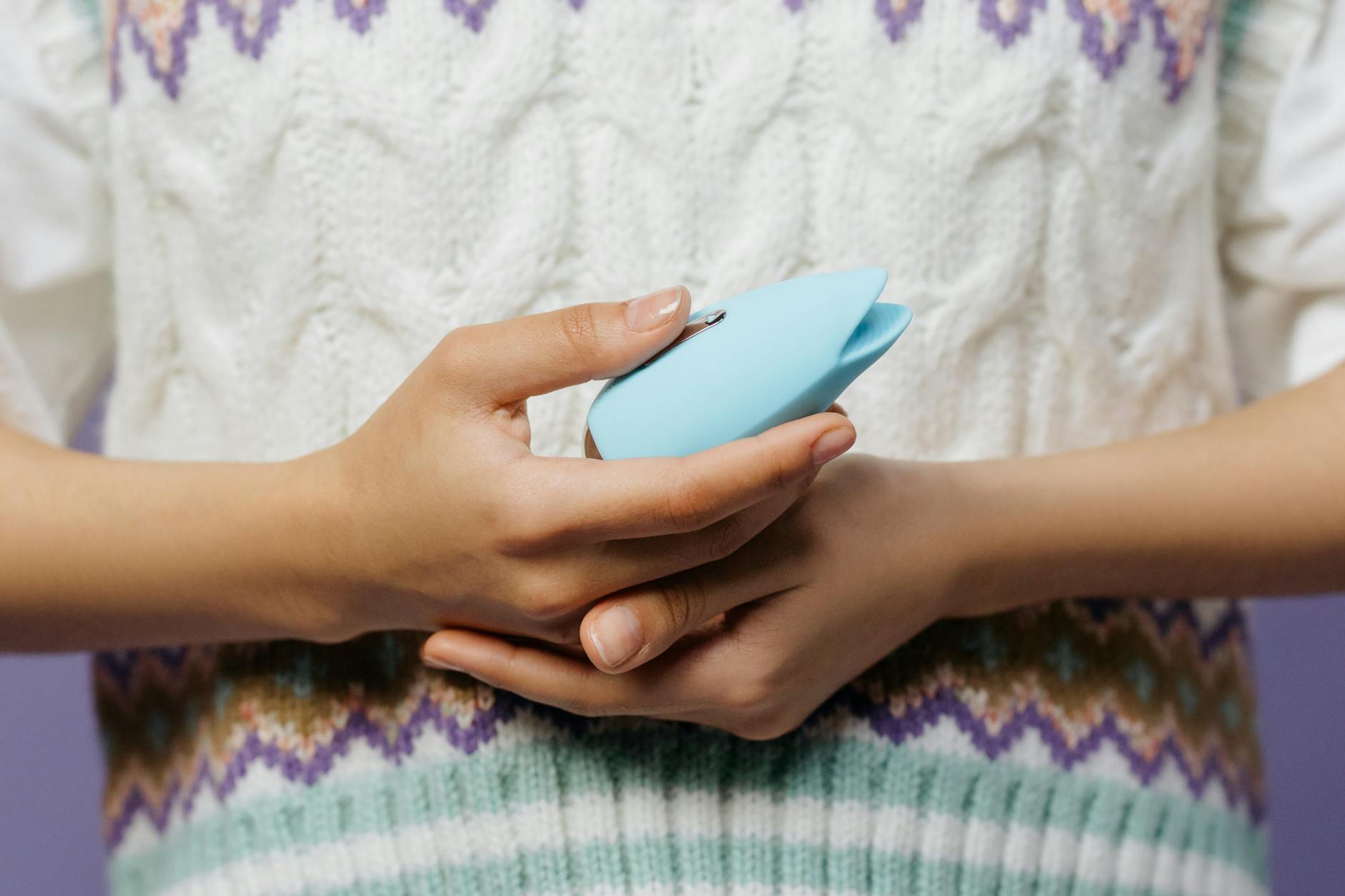
Let's name the thing no one wants to say out loud
Touch aversion is not the same as low libido. You can want intimacy and still flinch when someone reaches for your hand. You can love your partner and feel your body go rigid at their kiss. Touch aversion happens when your nervous system has learned that touch means something bad is coming. Or something already did.
It lives in your body before your brain can logic it away. And that's why solo pleasure, approached carefully, can be the bridge back to physical connection. A lemon vibrator doesn't require negotiation or timing. It asks nothing of you except permission to start small.
What actually happens when touch aversion settles in
Your body's threat detection system is doing its job, just overprotecting. After prolonged stress, difficult life transitions, medical trauma, or relationship rupture, the nervous system can interpret all touch as a potential threat. Even gentle touch. Especially gentle touch, because it doesn't signal what's coming next.
This is called hypervigilance, and it's exhausting. Your sympathetic nervous system stays activated. Your vagus nerve, which coordinates the rest-and-digest response, gets quieter. The result? You might want intimacy in theory, but your body says no way.
The good news is this is reversible. Your nervous system learned the aversion. It can learn something different.
Why lemon vibrators work for touch aversion recovery
Three reasons that matter.
First, control. You hold the lemon vibrator. You decide when it touches you, where, how long, how intense. No surprise, no negotiation, no one else's rhythm. Your nervous system can begin to understand that you are safe because you are the one in charge.
Second, sensation without intimacy pressure. A lemon clitoral vibrator creates focused, specific stimulus that doesn't carry the emotional weight of being touched by another person. It's sensation divorced from relationship dynamics. This lets your nervous system practice arousal without the complicated feelings that got tangled up with touch aversion in the first place.
Third, predictability. The Lem vibrator behaves the same way every time. It doesn't have moods, expectations, or hurt feelings if you need to stop. This consistency helps your nervous system down-regulate from threat mode into something closer to safety.
Building your nervous system back up: a protocol
Don't jump straight to pleasure. Start with permission.
Week 1: Just holding it. Hold the lemon vibrator, powered off, while you're doing something neutral. Reading. Lying in bed. Watching something mindless. Let your body adjust to having it nearby. No pressure to use it. This sounds slow, and it is. Slow is the point. Your nervous system needs time to realize nothing bad is happening.
Week 2: The lowest setting, clothed. Turn it on at setting 1, keep your clothes on, and press it to your clothed thigh or hip. Nowhere near your genitals yet. You're teaching your body that vibration equals pleasure, not pain or threat. Two to three minutes. That's it.
Week 3: Gentle exploration, still clothed. Move the vibrator up slightly. Inner thigh, maybe the edge of your underwear. Still clothed if that feels better. You're mapping your body back. Checking in with sensation without judgment. Some days you might feel ready to go further. Some days you'll want to stick with week 2. That's not regression. That's listening to yourself.
Week 4: Direct contact if you're ready. Only if your nervous system is signaling yes. And yes might look like curiosity, not arousal. Your body might not produce lubrication yet. That's normal. Use a water-based lubricant (the only kind safe with silicone lemon vibrators) and keep the setting very low. You're not chasing orgasm yet. You're reclaiming sensation.
What to do when your body says "not yet"
Some days you'll start and feel the walls come back up. Your chest tightens. Your throat closes. You feel nothing down there except numbness or tension. This is not failure. This is information.
Stop. Step away from the lemon vibrator. Don't push. Pushing teaches your nervous system that you don't listen to its signals. The whole point is learning to trust yourself again.
Instead, try grounding work. Name five things you can see, four you can touch, three you can hear, two you can smell, one you can taste. Breathe into your belly, not your chest. Take a shower. Go outside. Your nervous system needs to know it can hit the brakes and you'll respect that.
Then try again tomorrow. Or next week. There's no timeline here except the one your body sets.
When physical connection with a partner matters
If you're with someone, this work changes the dynamic. Rebuilding physical connection solo isn't selfish. It's actually how you make space for a partner later.
Here's what helps: tell your partner what you're doing, if you're comfortable. Not to perform for them or prove anything. But because secrecy around touch aversion often makes it worse. It becomes shame. And shame locks the nervous system even tighter.
You might say something like: "I'm working on rebuilding physical connection with myself. I need you to know that my body's reactions to touch aren't about you. I'm asking for patience while I learn to feel safe again."
A good partner will understand that you using a lemon clitoral vibrator is actually an investment in future intimacy with them. You're rewiring your nervous system to associate touch with safety and pleasure, not threat.
The thing about orgasms during recovery
You might not have them for a while. Or you might, and they might feel weird or disconnected or not like pleasure at all. This is completely normal. Your nervous system is rebooting. Orgasm is a later stage of that process, not the marker of success.
Success is: you held the vibrator and didn't panic. You felt sensation without tensing. You said no and respected yourself. You came back the next day willing to try again. Orgasm will show up when your nervous system decides it's safe.
Some people find that a lemon sucker (air-suction design) creates such focused, specific sensation that it sidesteps some of the nervous system noise that prevents arousal. The suction pulls blood to the area without the same kind of direct friction that can feel triggering. That specificity can sometimes make it easier to relearn arousal.
But only if and when you're ready. There's no rush.
When to bring in professional support
If touch aversion is severe, or if it connects to past trauma, a therapist specializing in somatic work or trauma (EMDR, Somatic Experiencing, Internal Family Systems) can speed the healing significantly. A relationship coach can help you and your partner navigate the conversation and maintain connection during this rebuilding phase.
You don't have to do this alone, and reaching out for help is not a sign that something is broken about you. Your body protected itself. Now you're all teaching it that safety is possible again. That takes support.
The patience part
Rebuild physical connection slowly. Let your nervous system lead. Stop when you need to. Rest when you need to. Celebrate the small wins: the day you held the vibrator without tension. The moment you felt something other than numbness. The time you said no and meant it, and nobody fell apart.
Your body will get back here. It just needs time, gentleness, and the understanding that healing isn't linear.
People also ask
How long does it usually take to recover from touch aversion?
There's no standard timeline because it depends on what caused the aversion and how severe it is. Some people feel significant improvement in four to eight weeks. Others need months. The key isn't speed. It's consistency and listening to what your body needs. Recovery happens in layers, not all at once. You might feel ready for more one week and need to step back the next. That's part of the process, not a setback.
Can I use a lemon clitoral vibrator if I'm still having panic responses to touch?
Absolutely, and that's actually where you start. The vibrator doesn't require you to be touched by another person, which is usually the triggering part. Your own hand on a vibrator you control is a different nervous system experience. If panic shows up, you stop. No judgment. But many people find that the solo sensation gradually teaches their body that touch doesn't have to feel dangerous.
Should I tell my partner I'm using a lemon vibrator to rebuild physical connection?
It depends on your relationship and what feels safe. Some couples find that transparency deepens trust during recovery. Others need privacy to rebuild connection without an audience. What matters is that you're not keeping it secret because you're ashamed. You're either sharing because you want their support, or you're keeping it private because you need solo space. Both are valid. The shame part is what matters.
What if using a vibrator makes my touch aversion worse?
Then it's not the right tool for you right now, or the timing isn't right. Stop using it. Try again in a few weeks or months. Or don't. Some people rebuild physical connection through yoga, massage, or dance before they get to solo pleasure with a device. The tool isn't the point. Reclaiming your relationship with your own body is.
Is it normal to feel nothing when I first start using a lemon vibrator?
Completely normal. After touch aversion, numbness often shows up as a protection mechanism. Your body learned to go offline to stay safe. Sensation comes back gradually. You might feel vibration before you feel pleasure. You might feel physical response (lubrication, increased heart rate) before you feel emotional pleasure. All of this is recalibration, and it takes time.
Can lemon vibrators help if I also have trauma from medical procedures?
Yes, because lemon clitoral vibrators give you total control in a way that medical touch doesn't. You decide when it happens, where, how long, at what intensity. That control is healing. Start even slower than the four-week protocol above. Your body might need extra time to learn that this kind of touch is different. And if it becomes too much, you have the option to stop immediately. That agency is part of what rewires the nervous system.
The bottom line
Touch aversion is treatable, and solo pleasure is a legitimate part of the healing path. A lemon vibrator doesn't fix the aversion by itself. But it gives your nervous system a way to practice safety, control, and sensation without the complexity of relational touch.
Start small. Respect when your body says no. Celebrate the moments it says yes. And know that rebuilding physical connection is not weakness. It's some of the most important work you can do for yourself and for your future relationships.
If you're struggling with this, talking to a professional can help too. Your primary care doctor can refer you to a therapist who understands both trauma and sexuality. You deserve support, and you deserve to feel safe in your own body again.