Let's start here: guilt isn't about the vibrator
When someone tells me they want to use a lemon clitoral vibrator but feel guilty about solo pleasure, the guilt rarely lives in the act itself. It lives in the story they were told about what that act means. Self-pleasure doesn't require permission from a partner, a culture, or a religion. But somehow most of us were raised as though it did.
I work with couples across every relationship stage, and I can tell you this with certainty: the people who feel most confident, connected, and satisfied in their intimate lives are the ones who've made peace with solo pleasure. Not because it replaces partnered sex. Because it proves to them, over and over, that their pleasure is worth their own time.
That shift changes everything.
Where the guilt actually comes from
It usually isn't from your own mind.
You grew up hearing certain messages about your body. Maybe it was explicit: "That's not something we do." Maybe it was subtle: your parents' discomfort, the absence of sex education that included pleasure, or the framework that taught you sex was something that happened to you, not something you created for yourself.
If you have a partner now, guilt can layer on another way. You might worry that solo pleasure somehow means your partner isn't enough, or that you're betraying them, or that you're weird for wanting it. Studies actually show the opposite. People in long-term relationships who maintain solo pleasure report higher satisfaction with their partners, not lower. Solo pleasure and partnered intimacy aren't competing products. They're different.
The guilt is often really about permission. We can intellectually know we're allowed to touch ourselves. Actually believing it is a different process.
Why a lemon vibrator changes the equation
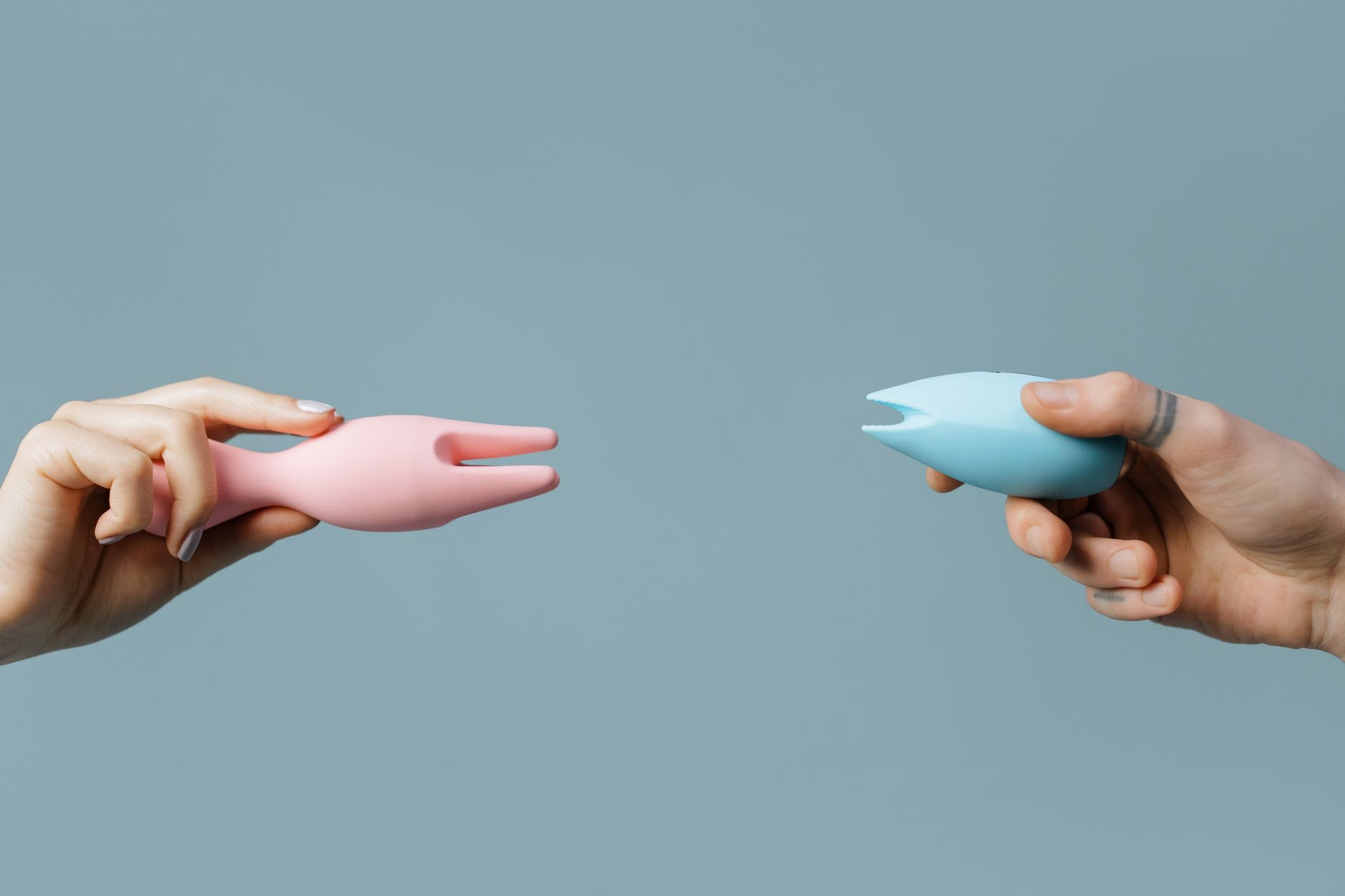
Here's something I've noticed across years of working with couples: using a tool that's intentional, beautiful, and designed specifically for your pleasure shifts the psychological framing. A lemon clitoral vibrator isn't something you're hiding or ashamed of. It's something you've chosen. It's a ritual.
When you hold something like the Lem, which is thoughtfully designed and honestly sold, your brain registers it differently than fingers alone. It says: "This is a real thing I'm doing for myself. Not something that happened in the dark. Not something I'm apologizing for." That's powerful.
The suction technology in lemon adult toys also means you're building a different kind of stamina and sensation than you might manage alone. That's not shame. That's knowledge. You're learning what your body is actually capable of when you're not distracted by performance anxiety or someone else's timeline.
Building the actual permission framework
Four things I tell people who are working through guilt around solo pleasure:
First: name what you actually believe. Not what you think you should believe. What do you really think about your pleasure? Write it down if it helps. Most people find that their stated values ("I deserve to feel good") and their lived values (the guilt) don't match. That gap is where the work lives.
Second: separate your body from your relationship. Your pleasure is not your partner's responsibility, and it's not their possession either. It's yours. If you have a partner, they benefit from you understanding your own body. You can be a better lover when you know yourself.
Third: set a real boundary around the time. This one's counterintuitive, but it works. Instead of stealing five minutes of solo time and feeling bad about it, schedule twenty minutes. Make it real. Put it on your calendar if you need to. The difference between secret time and intentional time is enormous for your nervous system.
Fourth: notice the difference afterward. After you've used a lemon vibrator for solo pleasure, how do you feel in your body? More grounded. Less tense. Clearer. That's not something to feel guilty about. That's your nervous system telling you it needed that.
The practical setup that removes friction
Guilt gets worse when conditions are bad. If you're rushing, uncomfortable, or hypervigilant, your nervous system stays locked. Here's what actually helps:
Find a space where you can be alone without your nervous system on alert. Not just physically alone. Psychologically alone. Your bedroom with the door locked is better than the shower where you're half-listening for sounds. Your partner genuinely asleep is better than them being "out for the afternoon." If you share space tightly, know that you'll be finding this time less often, and plan for that.
Water-based lubricant makes everything feel better and last longer. You don't need much. A small pump bottle sits discreetly in a nightstand.
Start at a lower intensity pattern on your lemon vibrator, especially if you're new to it. Your clitoris will tell you if it wants more. There's no medal for jumping straight to maximum sensation.
Time it so you're not watching the clock. Arousal that's always three minutes away is not the same as arousal that can build for fifteen. Your clitoris needs time, especially if you're managing guilt in the background.
What to do if your partner finds out (or already knows)
Honestly, this is where some couples actually improve their intimacy. Not because they start having solo pleasure together, necessarily, but because the conversation itself becomes honest.
If your partner doesn't know and discovers that you use a lemon clitoral vibrator alone, expect their first response might be hurt or confusion. That's often coming from the same framework you're working through. They might think it means you're not attracted to them, or that you're planning to leave. It almost always doesn't mean any of that.
The conversation that helps: "I do this for me. It's not about you or what you're not giving me. It's about understanding my own body better. It actually makes me happier and more present with you." Most partners soften when they hear that.
If your partner already knows and is supportive, you've got permission built in externally. But internal permission still matters. Don't let their approval become the only reason you allow yourself this.
FAQ: Solo pleasure and lemon vibrators
Q: Is it okay to use a lemon vibrator for solo pleasure if I have a partner? A: Yes. Full stop. Solo pleasure and partnered intimacy are two different things. Using a lemon clitoral vibrator alone doesn't diminish your desire for your partner or what you share together. Many couples report that their partners actually appreciate when they maintain solo practices. You show up more present, more satisfied, and more connected to your own body.
Q: How often should I be using a lemon vibrator alone? A: However often feels good. Some people find weekly time. Others find monthly. There's no quota for pleasure. If you're using it as an escape from intimacy in your relationship, that's worth examining with a therapist or coach. If you're using it to know yourself better and relax your nervous system, there's no "too much."
Q: What if I feel guilty even after I've given myself permission? A: That's normal. Permission isn't a one-time thing. It's something you practice. Each time you use a lemon vibrator for solo pleasure and survive the experience without catastrophe, your nervous system learns a little more that this is actually okay. The guilt often fades with repetition, not immediately.
Q: Can I use a lemon vibrator for solo pleasure if I'm not in a relationship? A: Of course. Solo pleasure without a partner has no competing narrative. You're not comparing it to anything. Some people find solo time feels simpler, clearer, and guilt-free once they're not managing another person's needs in the background. Others feel lonelier. Both are real. A lemon clitoral vibrator can be part of your self-care either way.
Q: How is using a lemon sucker different from using fingers? A: The suction technology engages different nerve endings and creates sensations your fingers alone might not. It's also, honestly, permission in object form. Holding something designed specifically for your pleasure tells your brain this is legitimate. You're not sneaking around with your own body. You're intentionally creating an experience for yourself.
Q: What if my partner uses a lemon vibrator too? A: Then you both get to understand your own pleasure better, separately and together. Some couples incorporate it into partnered time. Others keep solo time private and partnered time partnered. Both work. The key is that you're talking about it, not keeping it secret out of shame.
The thing about permission
You don't actually need your partner's, your parents', your religion's, or anyone else's permission to use a lemon vibrator for solo pleasure. What you need is your own. And the way you build that is by doing the thing, repeatedly, and letting your nervous system catch up to the fact that you're okay. You're more than okay. You're taking care of yourself.
That's not selfish. That's the foundation of every healthy intimate life. When you know what your body wants, when you believe you deserve to feel good, when you make time for your own pleasure without apology, you show up differently in every relationship. More confident. More present. More real.
A lemon vibrator is just the tool. The real work is deciding that your pleasure is worth protecting and prioritizing. That's the part that changes everything.