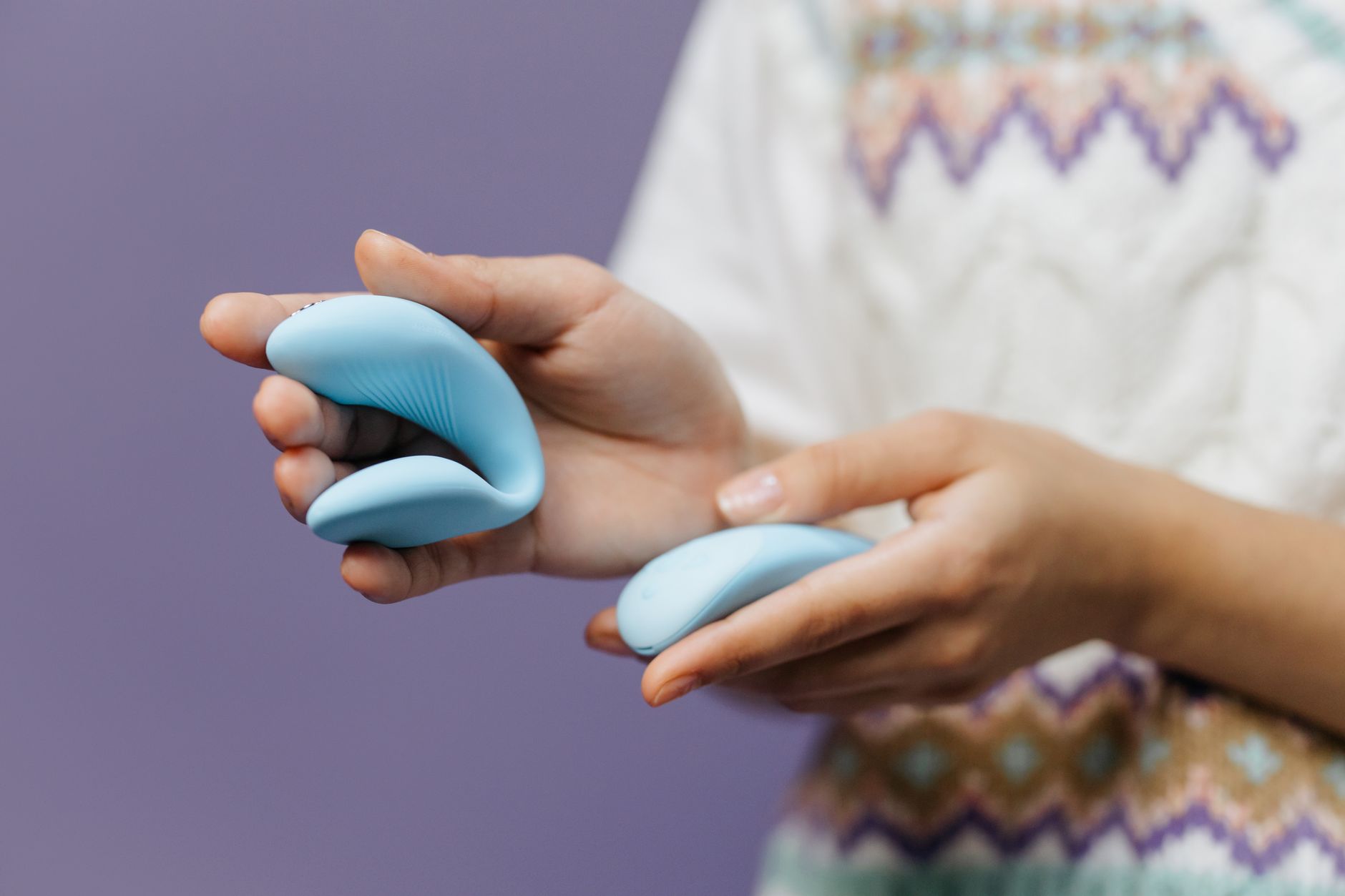
Let's talk about switching toys mid-relationship with your body
You've spent months or years with a vibrator that works. Your body knows its rhythm, its intensity, the exact angle that gets you there. Then you switch to something new, and suddenly nothing feels right. The lemon vibrator you've heard about might be genuinely better for you, but your nervous system doesn't know that yet.
This is real friction, and it deserves real strategy.
Why your body resists the switch
Your clitoral nerves learn patterns. When you use the same toy with the same intensity and angle for long enough, your body develops a neural pathway. It anticipates the feeling. It knows when arousal is building toward orgasm based on exact repetition. That's actually a sign of great pleasure, not boredom.
Switching to a new toy, even a really good one, feels like starting over because neurologically, you kind of are. The lemon vibrator might have superior technology, better suction patterns, or more intuitive controls than what you've been using. But your body doesn't care about specs. It cares about recognition.
Add to that: different toys stimulate different nerve clusters depending on their shape and intensity. If you've been using a traditional vibrator with straight oscillation, the pulsing suction pattern of a lemon clitoral vibrator will register as completely foreign, even if it's technically more efficient.
The transition timeline nobody talks about
Most people give a new toy two or three tries and decide it doesn't work. That's not nearly enough.
I recommend a four to six week transition window with intentional, graduated use. Week one and two: solo exploration only. No pressure to orgasm, no partner expectations. Week three: introduce a partner if you have one, but keep the lemon vibrator as your primary toy. Week four through six: alternate between your old toy and the new one so your nervous system doesn't feel abandoned.
Yes, this takes time. But if you're going to make the switch, treat it like you would moving to a new apartment. You don't throw out all your furniture on day one.
How to introduce your body to lemon sexual toys
When you first use a lemon vibrator, lower your expectations about orgasm. Seriously. The goal of week one is sensation mapping, not climax.
Start with the toy off, just exploring the feel of it in your hand and against your skin. Temperature matters. Many silicone toys are cool to the touch, which is pleasant but different if you've been using something that warms up. Hold it for a minute. Let your nervous system register it as not a threat.
When you turn it on, start at the lowest setting. The lowest. I don't care if it feels underwhelming. You're teaching your body that this is a safe sensation to gradually increase, not a shock to endure. Spend ten to fifteen minutes at that level, moving the toy around, noticing where on the clitoris you feel sensation most strongly.
The shape of a lemon clitoral vibrator is different from most traditional vibrators. The curved design and suction action mean the pressure point is slightly different. Angle matters more. Spend time finding your spot, which might be directly over the clitoris, slightly off to one side, or with the toy positioned lower than you'd use your old toy.
If you feel frustration building, stop. This is not the session to force an outcome.
What to expect when patterns collide
By week two, you might notice something weird. Your body might start expecting the old toy's feeling even when you're using the lemon vibrator. You might feel a flash of disappointment or impatience because this isn't triggering the exact neural cascade you're used to. That's not a sign the new toy is bad. That's a sign the old neural pathway is still active.
The best move here is patience and novelty. Change positions. Use different pressure. Try it during different times of the cycle when your clitoral sensitivity shifts. If you normally go solo, invite a partner to touch you while you use the toy, which changes the overall sensory input and lets your brain focus on newness rather than comparison.
When you finally have an orgasm with the lemon vibrator, you might notice it feels subtly different. Shorter, longer, more diffuse, more localized. That's not better or worse. It's just different because the stimulation pattern is different. Your body is learning a new language for pleasure.
The hybrid approach for faster transition
Here's what actually works for most people: don't break up with the old toy. Integrate it.
Use the old toy for the first five to ten minutes of solo time. Build arousal the familiar way. Then, when you're already partly there, switch to the lemon vibrator. Your nervous system is less resistant when arousal is already climbing. You're asking your body to learn a new finishing move, not completely unfamiliar territory.
After a few weeks of this, your body will start to build arousal with the lemon vibrator alone. The neural pathway is widening. You're not replacing the old one. You're adding to it.
Same principle applies if you have a partner. Establish arousal together using touch and other toys, then introduce the lemon sexual toy as part of partnered pleasure. There's less pressure to perform when shared connection is already happening.
Why intensity matching matters more than you think
If you've been using a high-intensity vibrator, jumping to a softer one will feel disappointing, even if that toy is technically excellent. The lemon vibrator has eight intensity levels. Many people jump to level six or seven immediately because that's where they were on the old toy.
Don't do that. Start at level two. Spend time at each level, recognizing that the suction-based stimulation might feel gentler than oscillation even when the decibel output is similar. Clitoral suction works differently than vibration. It pulls rather than oscillates. It's a completely different sensation profile.
By week three, when you've built familiarity at lower levels, you might find that level five with a lemon vibrator feels stronger and more pleasurable than level seven on your old toy. Your clitoral sensitivity has recalibrated.
Making the switch stick long term
After six weeks of intentional transition, you'll notice something. You'll reach for the lemon vibrator by habit now. Your body recognizes it. That's when you know the switch is solid.
But here's the thing nobody mentions: even after you've bonded with a new toy, sometimes you'll want the old one back. That's fine. Variety is actually healthy for your nervous system. It prevents habituation and keeps sensation novel. You don't have to choose one forever.
If you're in a relationship, communicate this timeline with your partner. Tell them you're intentionally trying something new and that the first few weeks might feel different. Ask them to match your patience. Some partners worry that a new toy means something is wrong, when really it just means you're exploring. Sharing the why takes away the subtext.
Switching from one lemon clitoral vibrator to another, or from another brand's toy to Hello Nancy's Lemon, isn't failure. It's evolution. Your body is capable of learning new pleasures. It just needs time, consistency, and a little grace during the adjustment.
People also ask
Why does a new vibrator feel weird at first?
Your clitoral nerves are literally trained through repetition. When you use the same toy the same way over time, neural pathways strengthen around that specific sensation. A new vibrator, even a technically superior one, requires your nervous system to build new pathways. This isn't intuition telling you it's wrong. This is your brain saying it's unfamiliar. Unfamiliar and bad are not the same thing.
How long until a lemon vibrator feels normal?
Most people report feeling comfortable with a new toy within two to four weeks of consistent use. Full integration, where you reach for it automatically and arousal builds naturally, usually takes four to six weeks. Solo exploration is faster than partnered use because there's no performance pressure. If you're using it with a partner, budget an extra week or two for your combined rhythm to sync up.
Can I use two different vibrators in the same session?
Absolutely. Mixing toys keeps sensation novel and lets your nervous system benefit from variety. Many people use a different toy during foreplay and a different one for orgasm. Some alternate between toys every few minutes. Experimenting with combinations actually accelerates your body's ability to adapt to new sensations, which can deepen overall pleasure.
What if I've switched vibrators three times and still feel restless?
There's a difference between switching because you're exploring and switching because you're searching for something that solves an underlying issue. If every new toy feels disappointing, the problem might not be the toy. It might be arousal speed, pelvic floor tension, medication effects, stress, or disconnection from your body. Consider whether the restlessness started after another life change. Sometimes we blame the tool when the real issue is context. If this pattern persists, working with someone who specializes in sexual health can help you figure out what's actually going on.
Is the lemon clitoral vibrator worth the switch if I already have something that works?
If your current toy is genuinely working and you're happy, there's no obligation to switch. But if you've been curious about clitoral suction technology, if your current toy is aging out, or if you're looking for something with more nuance in intensity control, the lemon vibrator is worth the transition investment. The suction-based stimulation is genuinely different from oscillation, and many people find it opens new possibilities. Just go in knowing the first week or two will feel unfamiliar. That's normal.
What should I tell my partner about switching vibrators?
Be straightforward. "I'm trying a new toy because I'm curious" is complete information. Your partner doesn't need to interpret it as judgment on what you've been doing together. Frame it as exploration, not correction. If your partner is involved in the transition, invite them to notice the differences with you instead of taking their nonreaction as rejection. Shared novelty often brings couples closer.
The reality
Your body is not rigid. It's plastic. It learns. It adapts. It can be loyal to one vibrator and then loyal to another one. Switching from whatever lemon adult toy you've been using, or from another brand entirely, to a Hello Nancy's Lemon vibrator is absolutely doable. It just requires the same thing deep pleasure always requires: time, patience, and the willingness to sit with something uncomfortable until it becomes familiar. That's not friction. That's how change works.