
Here's what nobody tells you about new relationship anxiety and pleasure
You like this person. Maybe you're even excited about them. But the moment things get intimate, your brain floods with noise: Am I taking too long? Do they think I'm weird? What if I can't come? What if they notice I'm tense?
That anxiety doesn't mean you're broken. It means you're human. And it's one of the most common reasons arousal stalls out early in a relationship.
Why anxiety kills physical sensation
When you're anxious, your nervous system is in fight-or-flight mode. Blood leaves your genitals and pools in your core and limbs. Your vaginal tissues don't lubricate as easily. Your clitoris becomes less responsive to touch. It's not a character flaw. It's basic neurology.
Most people respond by trying harder, which only tightens the anxiety knot. You focus on your performance instead of the sensation. And the harder you focus on having an orgasm, the further away it gets.
The solution isn't to relax (that's useless advice). It's to redirect your attention away from your partner's experience and back toward your own body's actual feedback.
That's where lemon clitoral vibrators come in.
Why lemon vibrators help with new relationship anxiety
Lemon vibrators offer three things anxiety-prone people need:
Predictable feedback. Your partner's touch varies in pressure, rhythm, and intention. A lemon vibrator's pattern stays the same, which means your nervous system doesn't have to keep recalibrating. That consistency actually helps your brain relax.
Direct genital activation. When you're anxious, indirect stimulation (like partnered foreplay) triggers more performance pressure. A lemon vibrator delivers intense, focused sensation directly to the clitoris, which bypasses the anxiety loop and goes straight to pleasure data your body can process.
Permission to focus on yourself. Using a toy in front of a partner can feel vulnerable, but it also sends a clear signal: I'm in charge of my own pleasure. That boundary shift often reduces anxiety more than any meditation would.
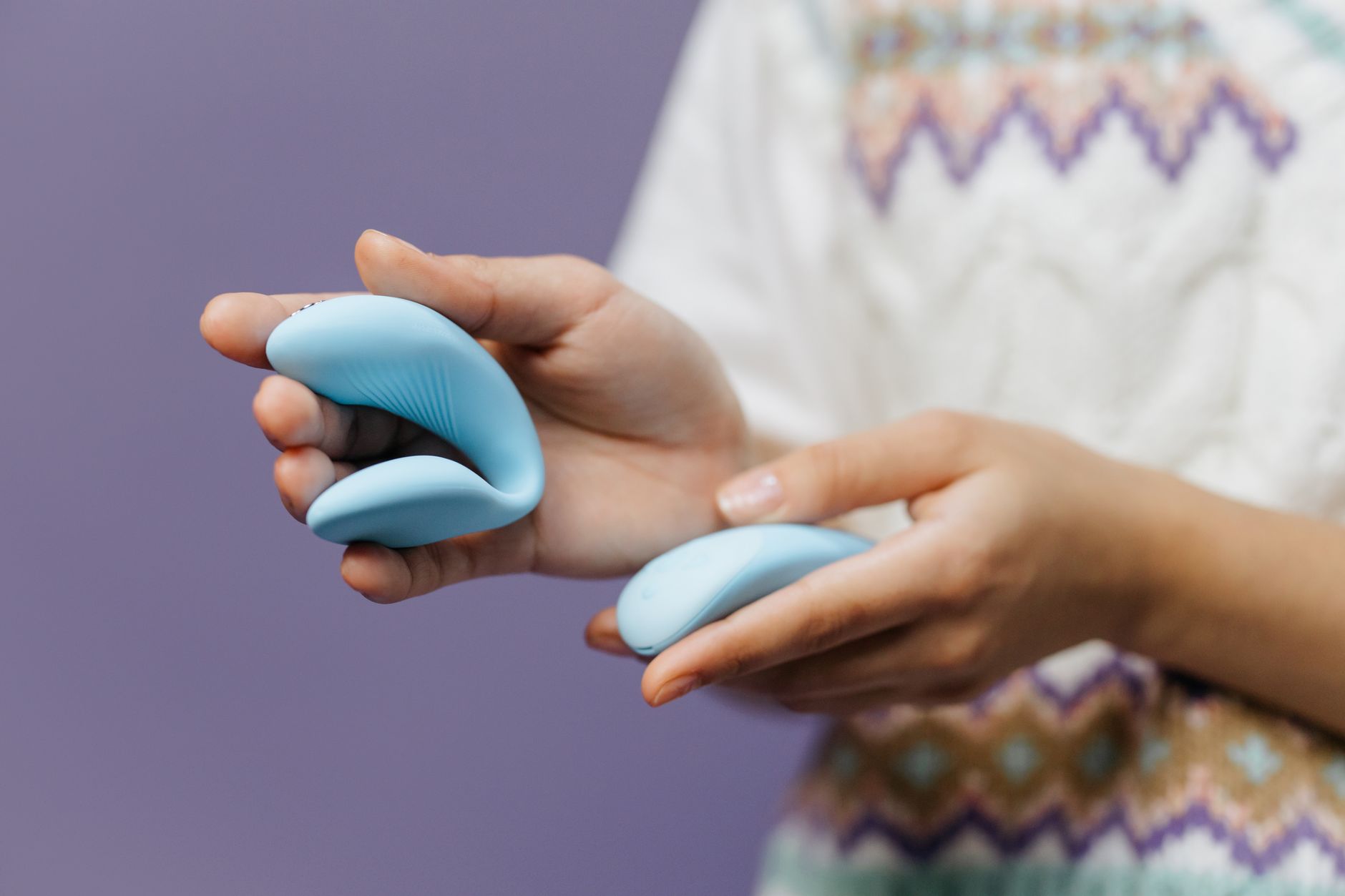
Photo by cottonbro studio on Pexels
The anxiety-specific setup that actually works
Here's what I recommend to clients who carry new relationship jitters:
Start solo first. Before you introduce your lemon vibrator into partnered time, spend 2-3 solo sessions getting to know how it feels on your body. This isn't performance practice. It's data gathering. You're learning your own pleasure baseline in a space with zero judgment and zero stakes.
Use it during partnered time without explanation. You don't need permission. You don't need to announce it or apologize. If your partner asks, a simple "I enjoy this" is enough. Most partners are relieved to have clarity about what actually works for you.
Start with lower intensity. When anxiety is present, high-intensity vibration can feel overwhelming because your nervous system is already activated. Begin with pattern 1 or 2 on your lemon vibrator and work up only if it feels good.
Create a physical anchor. Some people find that holding your partner's hand, or having them inside you while you use the vibrator externally, reduces the anxiety of being "separate." Others need actual physical separation to focus. Neither is wrong. What matters is knowing what you need before you start.
How to introduce it without the awkward conversation
The moment of "Hey, I want to use a vibrator" can feel mortifying. Here's how to make it simpler:
You don't have to make it a conversation at all. Next time you're intimate, when things are warm but not at peak intensity, simply reach for your lemon vibrator and use it. If your partner seems surprised, you can say: "This helps me relax and get there faster. I really like you, and I want to enjoy this."
That's it. You've named the truth: you're doing this for you, not away from them.
If your partner expresses discomfort, that's real information. But often, partners are simply relieved to have concrete feedback about what actually works for you. Arousal is not a team sport where everyone has to generate pleasure the same way.
What happens when you reframe it
Once you shift from "using a vibrator means my partner isn't enough" to "using a vibrator means I'm taking responsibility for my own pleasure," something opens up. You stop performing. You start experiencing.
That distinction is everything. When you're in your own sensation instead of judging your performance, anxiety naturally decreases. Your nervous system gets the signal that this is safe. Blood returns to your genitals. Arousal rebuilds.
Many clients tell me that the first time they used a lemon clitoral vibrator with a new partner, they felt more connected, not less. Because they were finally relaxed enough to actually be present.
The longer arc
As the relationship deepens and anxiety naturally softens, your relationship with the vibrator may shift too. Some people use it less. Some use it more. Some discover that their partner enjoys being involved in how they use it.
There's no arc you're supposed to follow. You're not supposed to graduate away from toys as intimacy "improves." This isn't a training wheel situation.
Lemon vibrators are just tools. Tools don't expire. And using them is never a referendum on your relationship. It's just data about what your body needs to relax and feel good.
When anxiety is deeper
If you notice that anxiety about pleasure shows up across multiple relationships, or if it's paired with difficulty being touched at all, that might be worth exploring with a therapist. Sometimes new relationship anxiety is just new relationship jitters. Sometimes it's pointing to something bigger about how you relate to your own body.
A lemon vibrator is useful either way. But it's a tool for pleasure, not a treatment for trauma or anxiety disorder. Knowing the difference matters.
The actual bottom line
You deserve to feel good. You also deserve to feel safe while you're trying to feel good. A lemon vibrator, used on your own terms in a way that feels right for your body and your relationship, can help you get back to both at the same time.
That's not selfish. That's the foundation of any intimate connection that actually works.
People also ask
Is it normal to feel anxious about orgasms with a new partner?
Completely normal. Your nervous system is processing a new body, new touch patterns, new emotional stakes. That activation interferes with arousal. It's not a sign that the relationship is wrong or that something is wrong with you. Most people experience this. The ones who move through it fastest are the ones who stop treating it as a problem to solve and start treating it as information to work with.
Can a lemon vibrator help if my anxiety makes me go numb during sex?
Yes, often significantly. Anxiety-induced numbness is your nervous system's protective response. A lemon clitoral vibrator's concentrated stimulation can cut through that numbness because it provides such direct, intense feedback that your brain can't ignore it. Start with lower intensity and let your body's response guide you up.
What if my partner thinks the vibrator means they're not enough?
That's a sign you need a conversation, but not about the vibrator. It's about what "enough" actually means. You using a vibrator doesn't diminish what your partner brings to your pleasure. It just means your body has its own specifications. A partner who gets defensive about you having pleasure tools is showing you something important about how they relate to your autonomy. That's worth paying attention to.
Should I use a lemon vibrator alone or with my partner inside me?
Both work. Some people find that external-only stimulation (just the vibrator, no partnered penetration) reduces performance anxiety because there's zero expectation of simultaneous orgasm. Others feel more connected if their partner is involved. This is about your nervous system's preferences, not about what's "better."
How long does it take for anxiety to decrease with vibrator use?
Some people feel the difference in one session. Others take 3-5 partnered experiences before the anxiety noise quiets down. What matters is consistency and patience with yourself. You're retraining your nervous system to stay present during intimacy. That takes repetition, not perfection.
Can I use a lemon vibrator if I take anxiety medication?
Yes. If anything, SSRIs or other anxiety meds paired with a lemon vibrator often work well together because the medication is already helping your nervous system stay more regulated. You might find that sensation improves as the medication takes effect. If your medication is interfering with arousal, that's separate from the vibrator question and worth discussing with your doctor.