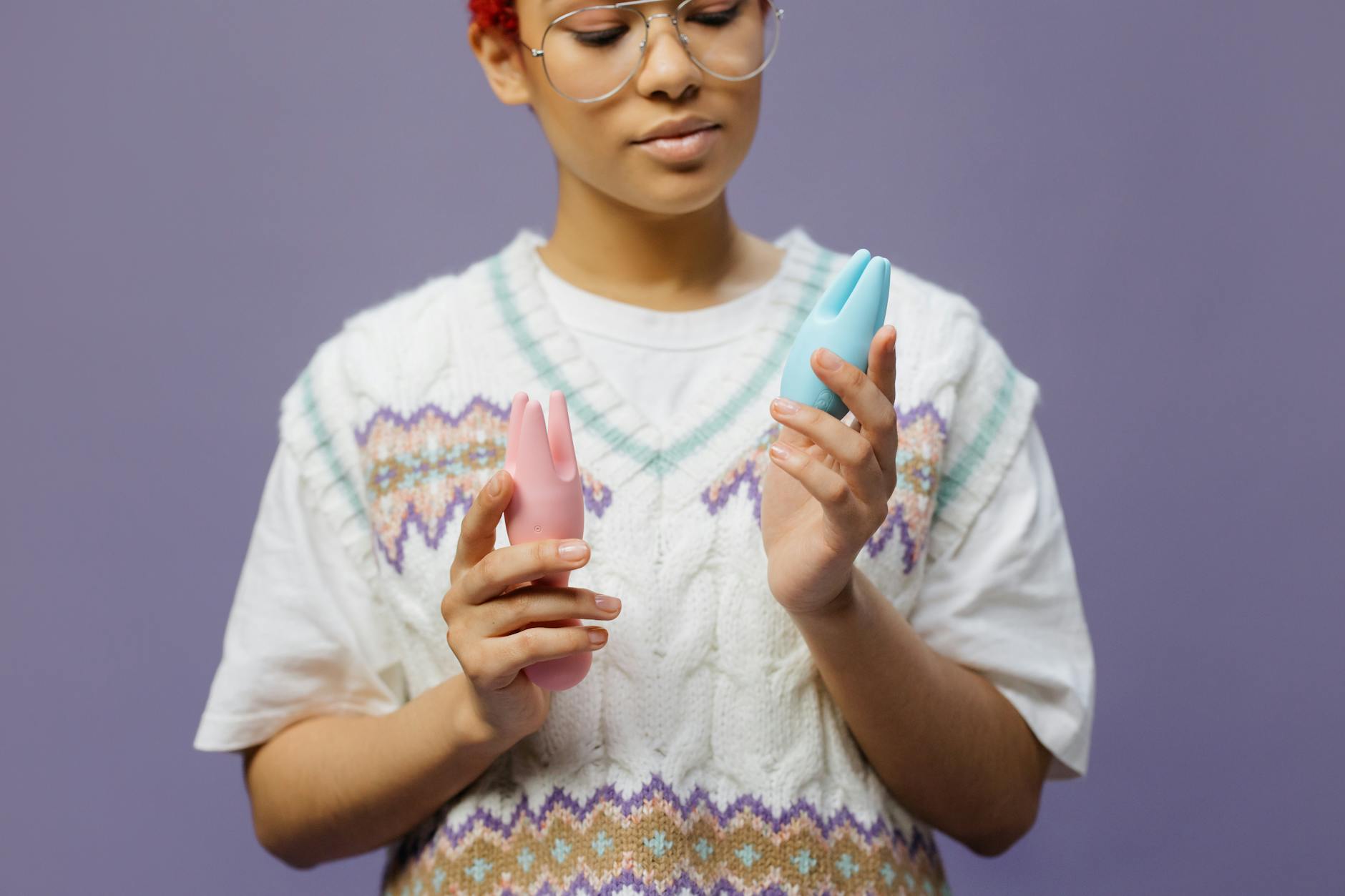
The sharp jolt nobody talks about
You touch a vibrator to your clitoris and it feels like a small electric shock. Not erotic. Not pleasant. Ouch. Most people assume something's wrong, so they stop, feel disappointed, and put the vibrator away. Here's what's actually happening: your clitoris is hypersensitive, and that's not unusual or broken.
Clitoral pain on first contact happens more often than pleasure guides admit. It's not your imagination, and it's not a reason to give up on lemon clitoral vibrators or any vibrator. It's a signal that you need a different entry point.
Why initial contact hurts
Your clitoris has roughly 8,000 nerve endings packed into a space smaller than a pea. When that many nerves are concentrated in one spot, stimulation can easily feel overwhelming before it feels good. This isn't a defect. It's how sensitive tissue works.
Several things make initial contact pain more likely:
Dehydration or low lubrication. Without moisture, direct pressure feels sharp rather than smooth. This happens regardless of arousal level. Some people's bodies just produce less natural lubrication, and that's medically normal.
Inflammation from hormones or irritation. Ovulation, the week before your period, or even friction from clothing throughout the day can make your clitoris tender. Irritation from douches, scented products, or even tight workout gear compounds this.
Pelvic floor tension. A tight pelvic floor acts like a clamp around your clitoris. Tension doesn't come from relaxation problems alone. It comes from stress, anxiety, trauma history, or habitual muscle guarding.
Direct nerve stimulation without arousal buildup. Your clitoris needs time to wake up. Jumping straight to vibration without any warm-up feels harsh because the nerve endings aren't primed yet.
Touch sensitivity or sensory processing differences. Some people have heightened sensory perception. Their nervous systems flag intense stimulation as threat before pleasure. This is neurological, not psychological.
Why lemon clitoral vibrators can actually help
This is the part that surprises people. You'd think a vibrator would make sharp pain worse. Often it does. But the right device used correctly does the opposite.
Lemon vibrators, particularly air-suction models like the Lem, work through a gentler mechanism than traditional bullet vibrators. Instead of pure vibration, they use gentle suction and pulsing that stimulates the entire clitoral area rather than drilling into one sensitive spot. This distributed pressure is often less jarring for sensitive tissue.
The pattern range matters too. You can start at the lowest setting and go even slower, building sensation gradually. With your partner or yourself, you control the pace. That control is crucial when initial contact is painful. You're not stuck with one intensity level that's too much.
Water-based lubrication changes everything. The Lem is waterproof and works beautifully with lubricant. Adding a generous amount of quality lube between your skin and the device entirely transforms the sensation. It shifts from sharp to smooth.
The actual sequence that works
Forget everything you've done before. Here's the sequence I recommend when initial contact causes pain:
Step one: Lubricate first. Before the Lem or any lemon vibrator touches your skin, apply a full teaspoon of water-based lubricant directly to your clitoris and the surrounding tissue. Yes, that much. Wipe a little onto the top of the device too.
Step two: Warm up without the device. Spend 5-10 minutes on manual touch. Use your fingers or your partner's, with plenty of lube. Long, slow strokes. The goal isn't orgasm yet. It's getting your nervous system to recognize this as pleasure, not threat.
Step three: Start off-center. Don't go directly to the clitoral head. Rest the Lem on the mons pubis or the upper labia first. You're introducing the sensation slowly, without intensity. This is weird the first time. Do it anyway.
Step four: Move slowly to the side. Once the off-center contact feels neutral or pleasant, shift slightly to the side of your clitoris, not directly on it. Many people find pressure on the clitoral shaft less painful than direct stimulation.
Step five: Only then move to center, and stay on the lowest pattern. Pattern one or two, depending on the device. Let the suction and pulsing happen gently. Your clitoris will gradually start to respond. This might take 3-5 minutes.
Step six: Let arousal build before increasing intensity. Once you feel the pleasure starting to edge out the sharp sensation, you can gradually increase the pattern. But rush this and you'll spike back into pain.
When to use lubricant that makes a difference
Not all water-based lubes are equal when you're dealing with sensitivity. Some are too thick and gluey. Others are too thin and dry out fast. For initial contact pain, you want a lube that's slippery, stays wet, and has a smooth glide.
Avoid anything with numbing agents. Sounds helpful, but it masks the pain signal your body's sending. You need to feel that feedback so you can adjust. Numbing just lets you push through discomfort until something actually gets irritated.
Silicone-based lubricant is smoother than water-based, but it damages silicone toys. Stick with water-based. Reapply as you go. Yes, it's messier. It's also more effective for sensitive tissue.
The partner conversation
If you're using a lemon vibrator with someone, they need to understand that initial pain isn't refusal. It's not "this isn't working." It's a starting position. Many partners rush the process because they want you to feel good, which is kind, but backfires.
Tell them explicitly: "I need 10 minutes of slow manual touch before any device. Then we start on the lowest setting, off-center, with lots of lube. Patience here is what actually makes this work."
Your partner might also help by using the device instead of you using it solo. Having another person control the Lem sometimes feels less intense than self-directed play, because you're not bracing for anything. You can breathe and relax instead.
When this is a bigger issue
If pain persists even with lubrication, warmup, and correct technique, talk to a gynecologist trained in sexual health. Certain conditions like vulvodynia or neuropathic pain need professional assessment. This isn't common, but it's real, and it's treatable.
You might also ask about provoked vestibulodynia or genitourinary syndrome. Both are real medical conditions that show up as clitoral or vulval pain with touch. They're not rare, and they're not permanent. Treatment options exist, from topical medications to pelvic floor therapy.
If you have a history of sexual trauma, initial contact pain might be a nervous system response rather than a physical sensitivity issue. This is where a somatic therapist or trauma-informed sex therapist becomes valuable. They help your nervous system learn that touch can be safe.
The reframe that matters
Initial contact pain doesn't mean vibrators are off-limits for you. It means you need a slightly different path in. The Lem's gentle suction mechanism, combined with patience and the right technique, works for many people whose bodies reject traditional vibrators outright.
This isn't about pushing through discomfort. It's about respecting what your body's telling you, meeting it where it is, and finding what actually feels good. That takes more time than you might expect. It's worth it.
FAQ
Why does my clitoris hurt when a vibrator first touches it but feels okay after a few minutes?
Your nerve endings need time to adjust from resting state to arousal. The first contact is harsh because there's no context yet. Your nervous system flags intense sensation as potential threat. Once you've built arousal through touch and warmth, the same vibration feels completely different. The tissue is more engorged with blood, more elastic, and your brain's processing the input as pleasure rather than alarm. It's normal and fixable.
Is clitoral pain a sign I shouldn't be using vibrators at all?
Not necessarily. Pain with vibrators often means you need a different device, different technique, or different timing. A lemon clitoral vibrator's suction mechanism is gentler than traditional bullet vibrators for many sensitive bodies. The Lem's lowest patterns are significantly less intense than most alternatives. Start there. If pain persists even with proper technique and lubrication, see a gynecologist. Some people do need to pause vibrators temporarily while addressing an underlying issue, but that's a medical question, not a forever answer.
Can I use numbing cream on my clitoris before using a lemon vibrator?
I'd avoid it. Numbing masks the pain signal you need to hear. Pain is information telling you to adjust your approach. If you numb it, you might push too hard, too fast, or with too little lubrication, and actually cause irritation. Let yourself feel the feedback. That's how you learn what works.
What's the difference between sharp pain and the normal sensitivity I feel when I first start?
Sharp pain feels like a jolt, pinch, or electric shock. You flinch. Normal sensitivity feels intense but not alarming. It might be strong, even a little overwhelming, but it doesn't make you pull away. If you're consistently flinching or pulling back, that's sharp pain and it's worth adjusting. If you're just noticing sensation without pulling away, keep going. The intensity will transform as arousal builds.
Does hormonal contraception affect how sensitive my clitoris is to initial vibrator contact?
Some people report increased clitoral sensitivity on hormonal birth control. Others notice the opposite. It varies widely. If you've recently started or changed contraception and your clitoral sensitivity has shifted, give it 2-3 months before drawing conclusions. Hormonal changes take time to settle. In the meantime, adjust your approach using extra lubrication and slower buildup. That works regardless of your contraception.
If I have pain with vibrator contact, does that mean my clitoris is damaged or abnormal?
No. Clitoral sensitivity exists on a spectrum. Some people's bodies are more reactive to intense stimulation. That's variation, not damage. Eight thousand nerve endings in a tiny space means your clitoris is built for sensitivity. That same sensitivity that creates initial sharp pain can eventually create intense, nuanced pleasure. It just needs the right approach.
What comes next
If initial contact pain has kept you from exploring lemon vibrators, you have a path forward now. Start with lubrication, build arousal slowly, begin off-center, and let the Lem's gentle suction do the work. Your clitoris isn't broken. It just needs you to listen to what it's asking for.
For more on technique when sensation feels unpredictable, read about how to use lemon vibrators when sensation feels unpredictable after birth. And if you're navigating this with a partner, our guide on how to introduce lemon vibrators without feeling awkward walks through that conversation step by step.
Your pleasure matters. Give yourself permission to take your time getting there.