Let's talk about the stress-arousal disconnect
You know the feeling. Work exploded, your inbox is a disaster, you haven't slept properly in weeks, and your partner (or your own curiosity) nudges toward intimacy. Your brain says yes. Your body says absolutely not. Nothing happens. Pleasure feels like it's behind frosted glass.
This isn't low libido. This isn't a relationship problem. This is your nervous system doing exactly what it's designed to do: when it detects threat (deadlines, overwhelm, financial worry), it shuts down everything unnecessary. Sex, pleasure, arousal. They're the first things to go.
The problem is that willpower and desire don't override neurobiology. Trying harder doesn't work. But there's a workaround, and it's surprisingly physical.
How stress actually blocks arousal
Your sympathetic nervous system (the gas pedal) and your parasympathetic nervous system (the brake) can't both be active at the same time. Stress keeps you floored on the gas. Arousal requires the brake, the slow breath, the feeling of safety.
When you're stressed, your brain is releasing cortisol and adrenaline. Your muscles are tight. Your clitoris isn't filling with blood the way it normally would. Your vaginal lubrication isn't happening. And your brain's arousal centers are being crowded out by threat-detection systems.
You can't logic your way out of this. You can't relax on command. But you can introduce sensation that's strong enough to interrupt the stress loop.
Why clitoral suction works when you're stressed
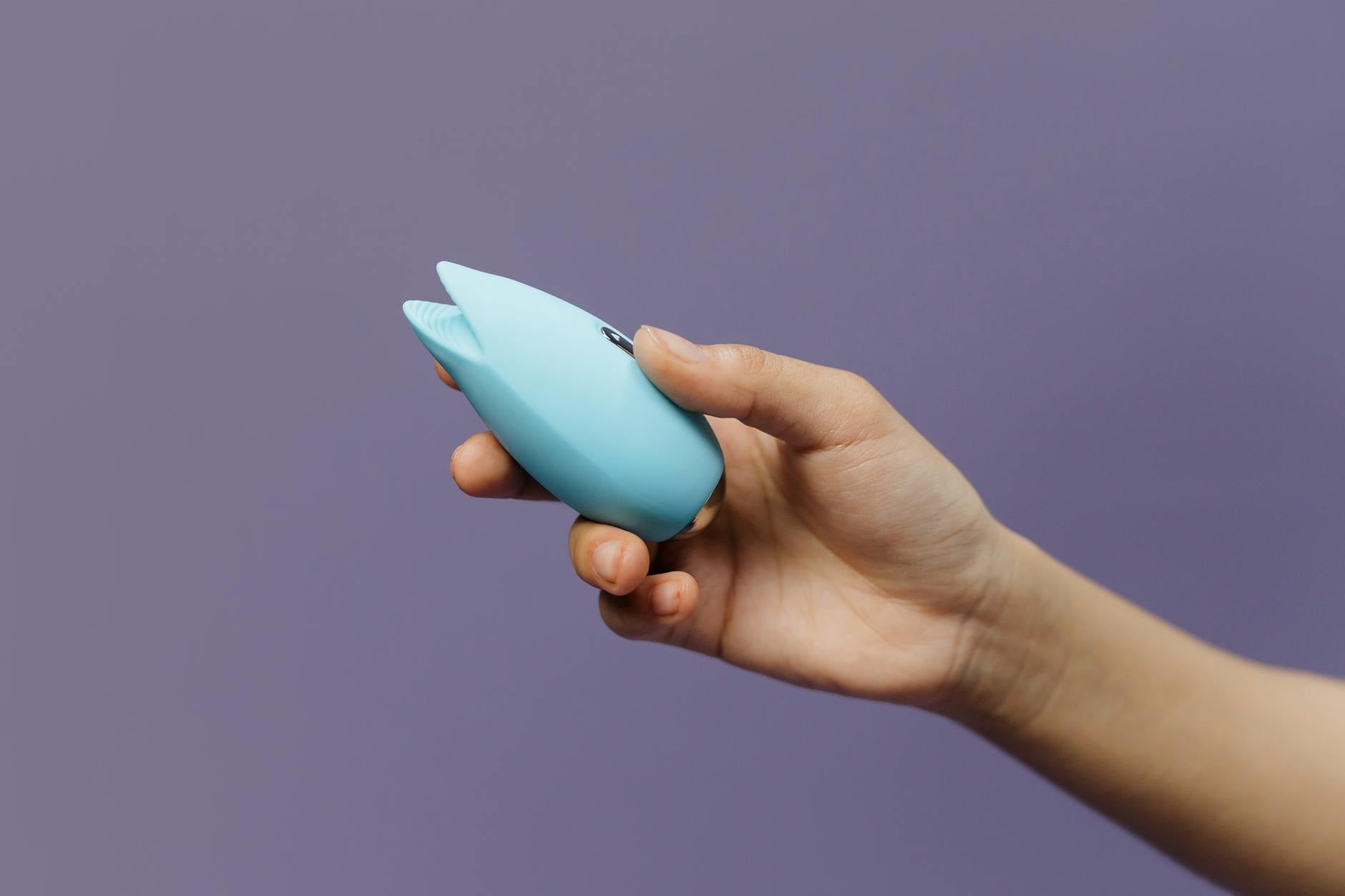
Here's what I see with clients who use Hello Nancy's Lemon vibrators during high-stress periods: the suction activates the parasympathetic nervous system directly through sensation, without requiring you to already be aroused.
Unlike traditional vibration, which requires your body to already be somewhat receptive, suction creates stimulation that can feel distinct and almost novelty-based. It's not the friction you expect. It's a rhythmic gentle pull that your body registers as something new.
That novelty, combined with the intensity, can actually interrupt the stress narrative running in your background. Your nervous system has to pay attention to something immediate and pleasurable. For a few minutes, the work email disappears.
Starting here is key: you're not trying to become deeply aroused. You're trying to give your nervous system a different signal.
The stress-specific technique
When you're genuinely in stress mode, skip the long foreplay fantasy.
Instead: sit or lie somewhere comfortable where you won't be interrupted. You don't need to be aroused yet. Use a water-based lubricant (it helps the suction feel smoother). Start on a low pattern with the Lem. You're not aiming for orgasm. You're aiming for "that feels different."
Suction works on the external clitoris without the internal friction that sometimes feels too intense when you're tense. Your pelvic floor muscles are already tight from stress. Direct pressure can make that worse. Suction, by contrast, feels almost like a massage.
Stay with low patterns for the first 5-10 minutes. Literally anything that happens (mild pleasure, just neutral sensation, even nothing yet) is the right outcome. Your job is to give your nervous system permission to shift gears.
Many clients tell me that after 10 minutes of low suction, something shifts. Suddenly their body remembers how to respond. Then you can turn it up if you want to. Or not. The point was always the nervous system reset, not the orgasm.
Stress plus a partner complicates things
If you're partnered and your partner wants to help, here's what actually works: disconnecting the pressure from the outcome.
Tell them: "I'm stressed. I want to use the Lem alone for a bit. This isn't about you. This is about my nervous system remembering what pleasure feels like."
Most partners are relieved. They were already worried that you were faking enthusiasm to please them. When you take the pressure off, everyone relaxes (literally).
If your partner wants to be involved: they can sit nearby. They can give you a shoulder massage while you use the Lem. They can just exist without expectation. Many couples find that this actually deepens intimacy. You're showing them your real process, not your performed one.
The schedule trick that changes everything
Here's something counterintuitive: schedule it. Not romantically. Practically.
When you're stressed, spontaneity often means you're trying to squeeze pleasure into an already full day. That creates more pressure, which creates more stress. Instead, block 15 minutes on a calendar when you know you won't be interrupted. Make it as normal as a shower.
This removes the spontaneity anxiety. Your brain knows: at 8 p.m., I have 15 minutes that's just mine. There's no negotiation. No wondering if it's the right time. Just a clear window.
Stressed people actually need more structure, not less. The ritual of it becomes grounding.
What kills the process
Four things that will guarantee it doesn't work when you're stressed.
First: checking your phone. Even if you're "not looking at it," knowing it's there keeps you tethered to stress. Put it in another room.
Second: trying too hard to feel something. You're not failing if you use the Lem and feel mostly neutral. That's your nervous system still downloading. Keep going with patience.
Third: comparing to how pleasure used to feel. Stress changes the flavor of everything. Orgasms might be less intense. That's not permanent. It's current.
Fourth: using it as a proof that something is wrong with you. Stress-induced arousal dips are wildly common and completely normal. They don't mean you're broken.
When to escalate beyond the Lem
If you've been using the Lem consistently for a month and nothing has changed, and your stress hasn't improved, that's worth examining.
Sometimes prolonged stress isn't just temporary overwhelm. It's a sign you need to make actual changes to your schedule, your work, or your boundaries. Pleasure can be a gateway to noticing that something bigger needs to shift.
In that case, talking to a therapist about stress management or rebuilding intimacy after relationship conflict becomes more valuable than any toy. The Lem is a tool for a temporary nervous system recalibration, not a substitute for addressing systemic stress.
If your stress is situational (big project, family stuff, seasonal), the pattern usually breaks once the situation does. You'll notice arousal returning naturally. When it does, you'll also notice that reconnecting with pleasure feels easier because you've built the pathway back.
One more thing: stress relief isn't selfish
I see a lot of people (especially people with partners) feel guilty about taking 15 minutes for pleasure when there's stress happening. That's the stress talking, not reality.
Your nervous system can't function optimally when it's in constant threat mode. Pleasure, including sexual pleasure, is one of the fastest ways to interrupt that cycle. It's not a luxury. It's maintenance.
Using a lemon clitoral vibrator when you're stressed isn't you ignoring the stress. It's you managing your physiology so you can actually show up better in your life and your relationships.
That's not selfish. That's smart.
Frequently asked questions
Does stress permanently damage my ability to have orgasms?
No. Your capacity for pleasure is still there. Stress just temporarily changes the access point. Once the stress level drops, your nervous system recalibrates and pleasure returns. This is reversible, even after months of high stress.
Can the Lem alone lower my overall stress levels?
It can help interrupt stress in the moment and give your nervous system a break. But it's not a substitute for addressing the root cause of stress. If you're using the Lem to calm down and then immediately returning to a chaotic situation, that's a Band-Aid, not a fix. The real work is boundaries, workload management, or whatever applies to your situation.
Why does suction feel different from regular vibration when I'm stressed?
Suction creates a sensation that's distinct from friction-based vibration. Because it feels different, your nervous system has to actively pay attention to it. That attention is what interrupts the stress loop. With regular vibration, your body might just absorb it without that reset moment.
How long does it take to notice a difference?
Some people feel the nervous system shift in the first session. Others need 3-5 sessions. If nothing has shifted after 10 uses, stress might be running too deep for pleasure alone to reset it. That's when talking to a therapist or making bigger life changes becomes the priority.
Can I use the Lem while my stress is happening, or do I need to wait until I'm calm?
You can absolutely use it while stressed. In fact, that's often when it's most useful. You're not waiting to become relaxed. You're using sensation to help your nervous system relax. The two can happen simultaneously.
If my partner is stressed too, should we use the Lem together?
Maybe not as the primary tool, especially if both of you are in high stress mode. When two stressed nervous systems are trying to sync sexually, it often adds more pressure, not less. Using lemon vibrators with a partner present works better when at least one person has already done some nervous system reset work alone first.
The path back to pleasure starts with your nervous system
Stress doesn't kill desire. It just locks it behind a locked door. Clitoral suction is one of the most direct keys I've seen to opening that door back up. You don't need to become deeply aroused first. You don't need conditions to be perfect. You just need 15 minutes, a little lube, and a tool that can interrupt the stress pattern.
Your pleasure matters, even when everything else feels like it's on fire. Especially then.
If you want to explore how to rebuild intimacy more broadly while navigating stress, or if you're looking for practical relationship strategies, reach out. That's what I'm here for.