Pleasure after trauma doesn't follow a timeline
Here's what nobody tells you: rebuilding intimacy with your own body after sexual trauma is messier than any self-help article makes it sound. You might feel ready one day and completely shut down the next. You might experience flashbacks at random moments. Your body might respond to touch in ways that surprise or alarm you. And that's not failure. That's exactly what healing looks like in the early stages.
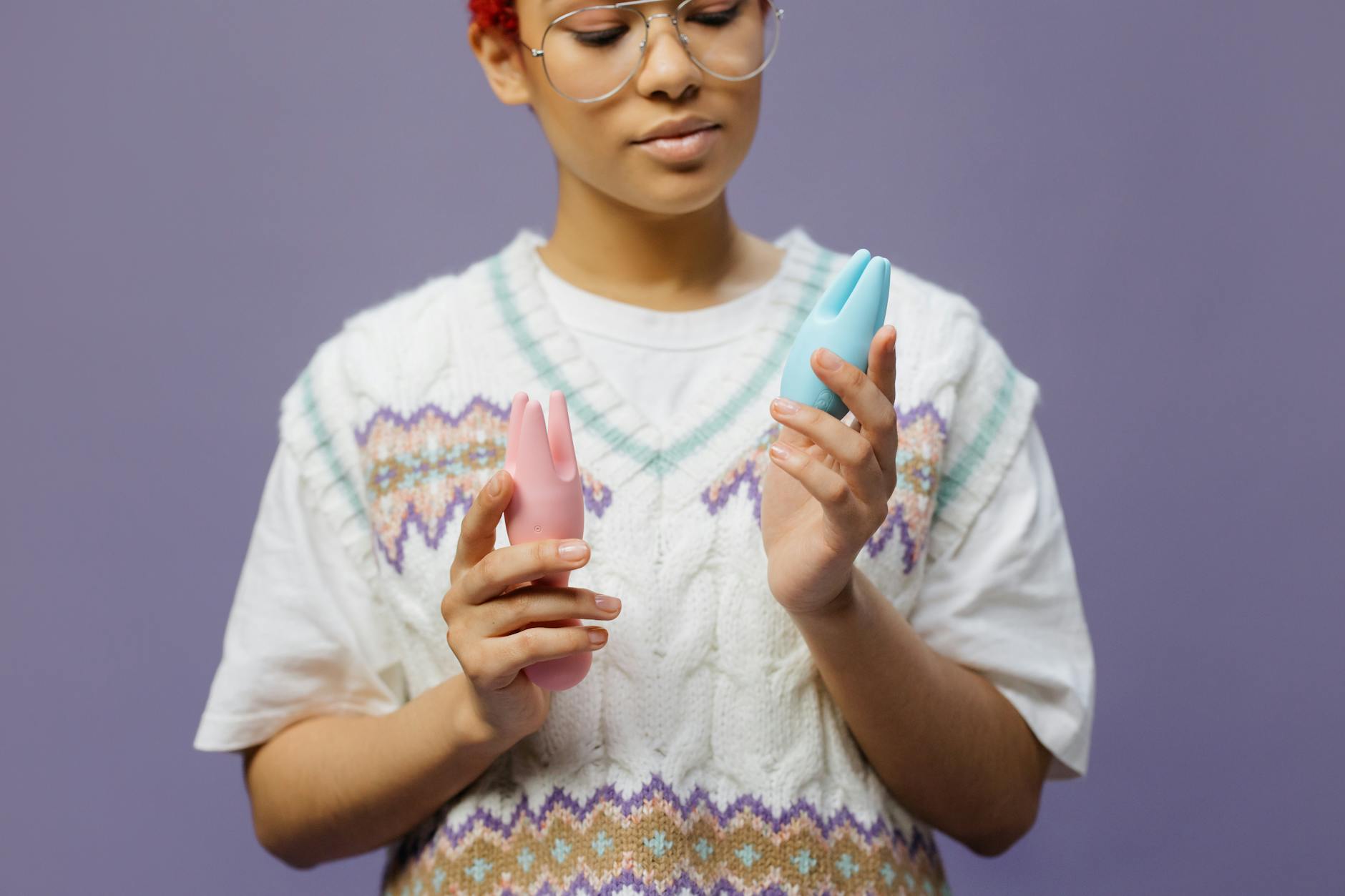
I work with clients navigating this regularly, and the most important thing I can tell you is this: lemon vibrators aren't a shortcut through trauma recovery. They're a tool for relearning what pleasure can feel like when you're ready for it, on your terms, without pressure.
Why air-suction lemon vibrators feel different for trauma survivors
Most traditional vibrators rely on direct friction. For many trauma survivors, sustained friction can trigger the nervous system because it mirrors sensations from the traumatic event itself. Air-suction technology, like the lemon clitoral vibrator design, works fundamentally differently. It stimulates through gentle suction pulses rather than persistent vibration. This creates several advantages when you're healing.
First: the sensation is less predictable in a good way. Your brain can't anticipate the exact next pulse the way it can with steady vibration. This breaks the pattern-matching that sometimes triggers flashbacks. Second: you have more control. The suction creates a distinct sensation boundary that feels contained and defined, which many survivors find reassuring. Third: the intensity can be modulated more gradually. You're not moving from off to buzzing. You're building sensation in micro-increments.
None of this is magic. But it does mean that lemon vibrators often feel safer to work with than other tools when you're early in recovery.
Building safety protocols before you start
Before you use any lemon vibrator, you need a safety plan. Not because vibrators are inherently unsafe, but because your trauma recovery deserves the same level of care you'd give to physical therapy after an injury.
Start with your environment. Use your vibrator only in a space where you feel genuinely secure. That might be your locked bedroom. It might be a specific chair. Pick a time when you know you won't be interrupted, and tell your brain why: "I'm doing this Thursday afternoon at 2 p.m., alone in my room, with my phone on silent and my door locked." Predictability calms the nervous system.
Next: establish a grounding object. Something you can hold, touch, or focus on if you feel yourself dissociating. This might be a smooth stone, a soft blanket, or a picture of someone who makes you feel safe. The point isn't to distract yourself but to anchor to the present moment.
Third: decide on a stop signal. Not a safe word (that language often carries trauma associations), but a clear gesture or word that means "I'm pausing now." It might be "stop" or "pause" or touching your opposite hand twice. Practice saying or doing it before you start. Practice noticing how your body responds when you do.
The actual session: pace matters more than destination
When you're ready to use a lemon vibrator, throw away any idea that you're "supposed" to reach orgasm. That goal can activate performance pressure, which activates your sympathetic nervous system (fight-or-flight), which makes everything harder. Instead, the goal is exploration and data-gathering. What feels safe? What makes you freeze? What's actually enjoyable versus what you think should be enjoyable?
Start by touching the lemon vibrator without turning it on. Hold it. Notice its weight and shape. Let your brain categorize it as a tool, not a threat. This sounds elementary, but it's the difference between your body staying resourced (calm, exploratory) and triggered (defensive, rigid).
When you turn it on, start at the lowest setting. This isn't timidity. The lemon clitoral vibrator's lowest settings are specifically engineered to provide sensation without intensity. Bring it near your external genitals but not directly on them. Notice how the air moves. Notice the sound. Give your nervous system time to recognize this as new, not dangerous.
If you feel your shoulders rising toward your ears, your breathing getting shallow, or a sensation of mental fog, pause. You're moving into a stress response. That's not a sign to push harder. That's a sign to stop, breathe, and return to your grounding object. There's no medal for powering through.
What reclaiming sensation actually looks like
Many trauma survivors report numbness or disconnection in their genitals. Some describe it as "that's not part of my body anymore." Others feel sensation but interpret every touch as threatening. Either way, your nervous system has learned to protect you by dampening signals from that area.
Lemon vibrators can help you gently reestablish that connection, but only if you approach it without judgment. You might use a lemon vibrator three times and feel nothing. That's not failure. Your body is still deciding whether to trust this. You might feel something unexpected, like pressure in your lower abdomen or a sudden urge to cry. That's not damage. That's release.
The work is in the repetition and the patience. Consistency matters more than intensity. Three gentle five-minute sessions spread across a week will do more for your recovery than one intense thirty-minute session. Your brain is learning new pathways. That takes time.
When to involve a partner (or why you might not)
If you're in a committed relationship, your partner might want to be involved in your healing. That's worth discussing carefully. Some trauma survivors find that external presence, even from a trusted partner, reactivates vigilance. Others find that a partner's encouragement makes them feel less alone.
If you do involve a partner, here are the non-negotiables: they watch, they don't direct. They're present, not in control. They never touch the lemon vibrator. They never suggest you "just relax" or "try harder." Your body isn't failing. Your nervous system is protecting itself. A good partner understands that difference.
Many trauma survivors benefit more from solo exploration first. When you're alone, you can move at exactly your pace without monitoring someone else's reaction. That autonomy is itself healing.
Common setbacks and what they actually mean
You might schedule a session, sit down, and immediately feel ashamed. Your brain might flood with negative self-talk: "What am I doing? Why do I deserve this?" This is the voice of your trauma trying to keep you small. It's not the truth. It's a protective mechanism that's now working against you.
When this happens, pause. Don't push through. Instead, ask yourself: "What would I tell a friend right now?" Often, you'll hear yourself say something kind. That's your actual wisdom. Listen to it.
You might also reach a point where everything feels like it's working, and then you'll have a setback. A smell will trigger a flashback. A particular touch pattern will send you into a freeze response. These aren't signs that recovery is failing. They're signs that your healing is nonlinear, which is completely normal.
Document your patterns. Not obsessively, but enough to notice: what time of day feels safest? What settings on your lemon vibrator feel most accessible? Do you heal better on days when you've exercised? When you've felt supported by others? When you've spent time outside? Your data becomes your roadmap.
The relationship to orgasm after trauma
Here's the thing that changes: orgasm might feel totally different after trauma. It might feel weaker, or sharper, or arrive alongside unexpected emotions. Some trauma survivors experience orgasm as anxiety rather than release. Others find it's impossible until they've done significant nervous system work.
All of these experiences are valid. Your lemon vibrator isn't a tool for achieving a specific outcome. It's a tool for noticing what your body is actually capable of right now, in this stage of your healing.
Many of my clients report that after months of gentle, consistent work with clitoral vibrators, sensation returns. Pleasure becomes less complicated. But that's not a guarantee. And it's not the point. The point is reclaiming your body as yours. The point is learning that you can experience touch without fear. Everything else is bonus.
FAQ: Common questions about healing and lemon vibrators
What if I feel nothing when I use a lemon vibrator?
Numbness is your nervous system's way of protecting you. It's not permanent. Consistent, gentle exposure often helps sensation return over weeks or months. If you've been working with a vibrator for several months with no change, talk to a trauma-informed therapist. Sometimes nervous system work (somatic therapy, EMDR, or other modalities) needs to happen alongside or before pleasure work.
Can I use a lemon clitoral vibrator if I'm also in trauma therapy?
Yes, but tell your therapist. A good therapist will either support this as part of your healing or explain why it might be worth pausing for now. The key is alignment between your therapist and your own boundaries. If your therapist seems judgmental about vibrators, that's worth addressing directly.
How do I know if I'm pushing too hard versus honoring my pace?
Pushing too hard feels like shame, performance pressure, or the sense that you're "supposed" to be further along. Honoring your pace feels like curiosity, safety, and the freedom to stop whenever you want. Your body will tell you which one is happening. Listen to it.
What if my partner wants me to use a lemon vibrator but I'm not ready?
Your readiness is the only thing that matters. Not your partner's timeline, not external pressure, not guilt about their expectations. A partner who respects your healing will wait. If they don't, that's information about the relationship that's worth examining.
Can I use a lemon sucker design if I have trauma around oral sex specifically?
The air-suction mechanism of lemon vibrators doesn't mirror penetration or the sensations of oral sex the way traditional vibrators sometimes do. That said, if the suction itself triggers you, honor that. There's no tool worth overriding your nervous system's protective response. Work with what feels safe.
How long until I feel "normal" again?
Trauma recovery isn't linear, and there's no fixed timeline. Some people notice significant shifts in weeks. Others need months or years. The word "normal" might not even be the right target. Many survivors emerge from healing with a deeper, more intentional relationship to their own pleasure than they had before the trauma. That's not normal. It's better.
Your healing deserves time, gentleness, and patience. A lemon vibrator is a companion for that journey, not a destination. You're already doing the hardest part by showing up for yourself with honesty and care.