
How to Use Lemon Vibrators When Antidepressants Numb Intimacy
Let's be real: antidepressants are a trade. You get your mood back, your motivation returns, the fog lifts. But somewhere along the way, orgasms become harder. Sensation feels muffled. What used to light you up now feels like watching it happen to someone else.
That's not a personal failure. That's pharmacology. And it's fixable.
I've worked with hundreds of people navigating this exact terrain. The good news? Your body isn't broken, your desire hasn't permanently vanished, and your best orgasms aren't behind you. What's happening is measurable, predictable, and absolutely manageable with the right approach and tools.
What antidepressants actually do to sensation
Most commonly prescribed antidepressants—SSRIs like sertraline, fluoxetine, and paroxetine—work by increasing serotonin in your brain. They're phenomenal at treating depression and anxiety. But serotonin also regulates sexual arousal and orgasm. When your serotonin levels shift, so does your whole pleasure system.
Here's the cascade: arousal takes longer to build. The body needs more sustained stimulation. Orgasms become harder to reach. When they do happen, they're often duller—less intense, less satisfying, sometimes barely noticeable at all.
The thing nobody explains is that this happens on a spectrum. Some people experience mild flattening. Others describe sex like touching a numb limb. Both are real. Both are chemical, not psychological.
Why numbness doesn't mean you've lost desire
This is crucial: sensation and desire are different systems. You can completely lose sensation—no feeling in your genitals, no tingling, no buildup—and still experience genuine desire. Conversely, you can have strong desire and find the physical pathway blocked.
Most people on antidepressants experience a mix: desire might be there (or might be dampened too, depending on the drug), but the nerve signals aren't arriving like they used to. It's like having the motivation to dance but moving through water.
The danger is conflating the two. You feel numb, conclude you don't want sex, then avoid the whole thing. Actually, you want sex fine. Your body just needs different input.
That's where clitoral vibrators change everything.
How clitoral suction differs when sensation is muffled
Traditional vibrators work through vibration alone. If your nerves are quieted, vibration might barely register. You're waiting to feel something that's too subtle to break through the numbness.
Clitoral suction devices like the Lem work differently. They create rhythmic pressure and release. That pressure travels deeper into the tissue and nerves. It's a more forceful signal. For someone whose sensory input has been chemically dampened, that stronger stimulus often cuts through in a way a gentler vibrator won't.
You're not forcing anything. You're using physics to make the signal loud enough that your nervous system actually receives it.
Starting the conversation with your doctor
Before you assume numbness is permanent, talk to your prescriber. Seriously. Many people tolerate sexual side effects in silence, thinking it's the price of mental health. But your doctor has options.
They might switch you to a medication with a lower sexual side effect profile. Bupropion, for instance, often has less impact on orgasm than SSRIs do. They might add a second medication to counteract the sexual effects, or adjust the timing of your dose. Some people take their SSRI at night instead of morning, which can reduce daytime impact.
None of this is guaranteed. But nobody should suffer unnecessary numbness without exploring it first.
Using a lemon clitoral vibrator when sensation is dulled
If medication adjustment isn't an option or hasn't worked, here's the practical setup.
Start with the Lem on the lowest pattern. Not because you're trying to ease into it, but because you need to feel where the device is before you add intensity. Let your body detect the sensation first. Many people skip this step and go straight to high intensity, which just feels tiring rather than pleasurable.
Spend a full five to ten minutes on pattern 1 or 2. Map the sensation. Notice what you can actually feel. This isn't about rushing to orgasm. This is about relearning what pleasure is available to you right now.
Once you've found the patterns you can feel, you can gradually increase. But don't force it. If pattern 4 still feels numb, stay at 3. Your goal isn't the strongest orgasm possible; it's to experience any orgasm, any pleasure, with consistency.
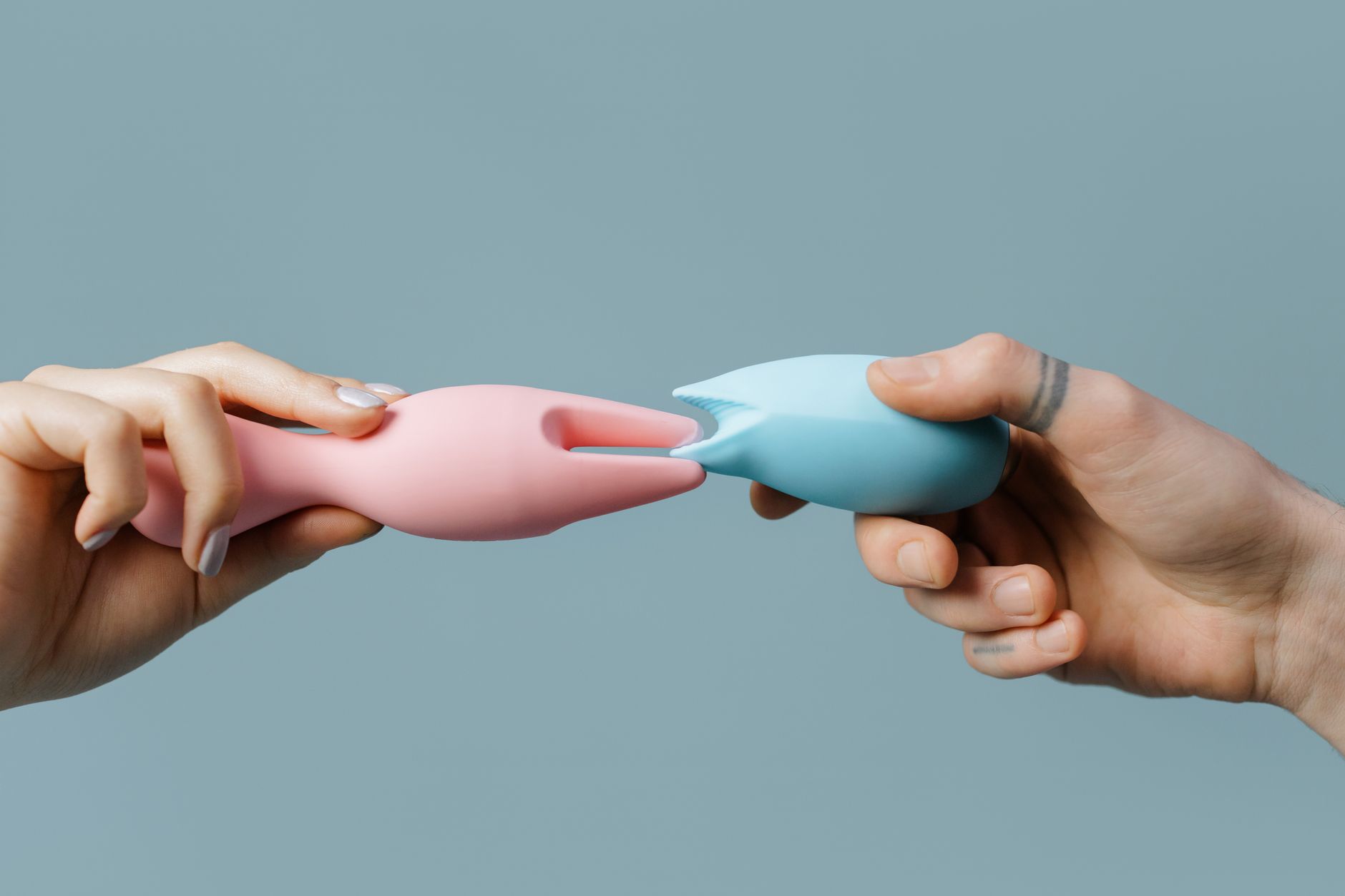
Photo by cottonbro studio on Pexels
The patience piece (and why it matters)
One of the hardest parts of pleasure after antidepressants is accepting that it takes longer. You used to get there in ten minutes. Now it's thirty, forty, sometimes sixty minutes of sustained stimulation before anything builds.
That's not failure. That's your nervous system recalibrating. It's not lazy or broken. It's just slower.
The mental part of this is letting go of the narrative that good sex is fast. It isn't. Some of the most satisfying sex people have involves twenty minutes of warm-up and attention before anything starts to really move. Your antidepressants are actually teaching you something most people never learn: that sex doesn't have to be quick to be real.
Set aside time. No performance pressure. No checking the clock. Just you and whatever sensation you can find with your lemon vibrator, for as long as it takes.
When it's also about your relationship
If you have a partner, numbness creates a secondary problem: they often feel rejected. When you stop initiating sex or seem disconnected during intimacy, they might interpret it as loss of attraction or desire for them specifically. It isn't. But it feels that way from their side.
The conversation to have is: "This is my nervous system adapting to medication. It has nothing to do with how I feel about you. I want to stay connected, and I'm figuring out what that looks like now."
Then actually invite them in. Maybe they use the Lem with you. Maybe you use it during partnered sex. Maybe you take it slow together, building sensation as a team rather than you performing for them.
Most partners are relieved when the alternative gets named. Confusion and rejection hurt way more than "my body needs different input right now."
When sensation returns (or doesn't)
For some people, sensation fully returns when the medication stabilizes, your body adjusts, or you find the right dose. For others, this becomes your new normal. That's worth acknowledging head-on rather than waiting five years for feeling that might not come back.
If sensation does return gradually, keep using the clitoral vibrator anyway. You've learned something. You now know what works for your body under pressure. That's valuable regardless of whether the numbness was temporary.
If it doesn't return, your lemon vibrator becomes a permanent tool. Not a consolation prize. A genuine way to experience pleasure that matches your current neurology. That's not settling. That's adaptation.
Small shifts that create momentum
Start small. One session a week with your Lem, twenty minutes, no expectations. Notice what you can feel. Track whether sensation changes session to session (sometimes it does). Celebrate tiny wins. If orgasm feels 10% more present this month than last month, that's huge progress.
Stop comparing yourself to your pre-medication sexuality. You're a different body now, temporarily or permanently. Different doesn't mean worse. It just means different. And different can be good once you stop fighting it.
Frequently asked questions
Can I use a lemon vibrator if I'm on multiple antidepressants?
Absolutely. The numbness might be more pronounced if you're on multiple medications, but the mechanical principle remains the same: suction creates a deeper stimulus than vibration alone. You might need longer warm-up time or higher intensity, but lemon clitoral vibrators work across medication combinations. If sensation is extremely muted, ask your doctor about medications with lower sexual side effects.
How long does it take to feel something again with a vibrator?
It varies dramatically. Some people feel a shift within three to five sessions. Others take weeks or months to rebuild sensation. What matters is consistency, not intensity. Weekly sessions with manageable expectations usually show changes faster than sporadic desperate attempts.
Is numbness from antidepressants permanent?
Not always. Many people experience numbness initially, then gradually regain sensation as their body adjusts to the medication (usually over three to six months). Others find it persists for the duration they take the medication. Neither outcome is guaranteed. Talk to your doctor about what to expect with your specific drug.
Should I stop my antidepressant to get sensation back?
Please don't. Stopping antidepressants without medical supervision can trigger withdrawal symptoms and depression relapse. The numbness is a side effect, not a reason to abandon medication that's working for your mental health. Work with your doctor on alternatives or additions that preserve your mental stability while addressing sexual side effects.
Can I use Hello Nancy's Lemon vibrator with a partner if I'm on antidepressants?
Completely. Many couples find that partnered use actually helps, because it removes the performance pressure. Your partner can use the lemon vibrator on you while you focus on sensation without worrying about timing or reciprocation. This often helps rebuild intimacy when numbness has created distance.
What if the vibrator doesn't help?
If sensation remains unmoved after a month or two of consistent use, the next step is your prescriber again. Medication adjustment is legitimate. So is exploring whether additional numbness is happening from something other than the antidepressant itself, like depression still present beneath the medication. A good doctor will keep troubleshooting with you.
Antidepressants give you your life back. Sometimes they also take a piece of pleasure with them. That trade feels unfair, and it is. But it's not permanent, it's not a character flaw, and you're not broken.
You're just operating with different chemistry. Different chemistry needs different tools. Your lemon vibrator is one of those tools. Use it with patience, talk to your partner and your doctor, and keep experimenting.
Your pleasure matters as much as your mental health. Both are possible.