Let's name the thing nobody says out loud
You want solo pleasure. But wanting it and feeling entitled to it are two completely different things. The guilt creeps in. The fear that someone will find out. The voice in your head—sometimes it sounds like your mother, sometimes like an old partner, sometimes like some generic authority figure you can't quite place—telling you that this is selfish, undignified, or wrong.
That voice isn't your voice. It's borrowed.
The research is clear: women who carry shame around self-pleasure report lower sexual satisfaction overall, weaker orgasms, more difficulty experiencing pleasure with partners, and higher rates of sexual dysfunction. Shame doesn't protect you. It damages you. And the good news is that you didn't install it alone, which means you can uninstall it.
Why shame around solo pleasure is so stubborn
Most of us learn the rules about our bodies before we even know we're learning them. You get a message at seven that your body belongs to you. At fourteen, you get a different message: your body belongs to everyone else, and touching yourself is wrong. By adulthood, that contradiction is so deep that it feels like truth instead of like a story someone else wrote.
The shame intensifies if you grew up in a household with religious teaching that categorized masturbation as sinful. If you had a partner who made you feel it was a betrayal. If the only time your body was discussed, it was in the context of being attractive to others. These aren't small things. They shape how you move through pleasure for decades.
Here's the clinical observation: shame about solo pleasure is almost never actually about the act itself. It's about the story you inherited about what it means about you. That you're needy. That you're broken. That you're not satisfied by your partner (if you have one). That you're somehow less than. None of that is true.
Solo pleasure is a baseline human right, not a referendum on your relationship or your character.
The permission piece comes first
You can buy the best clitoral vibrator on the market, but if you don't address the shame, you'll use it in secret, rush through it, or not use it at all. The tool matters less than the permission.
Start here: write down the specific messages you learned about your body. Not in general terms. Specifically. "My mother said touching yourself is dirty." "My ex told me he'd rather I not use toys." "I learned that good girls don't." Get them out of your head and onto paper. This alone is powerful because you get to see them as sentences someone else spoke, not as immutable truth.
Then ask yourself: do I actually believe this? Not "should I believe this," but do I. If you don't, you can consciously reject it. If you do, you need to understand why and what evidence might change your mind. Maybe it's reading research on the benefits of solo pleasure. Maybe it's hearing from friends that they do it too. Maybe it's just deciding that your pleasure matters more than an old rule.
This isn't about forcing yourself to feel fine. It's about getting honest about what beliefs are actually yours and which ones you're running on borrowed guilt.
How a lemon clitoral vibrator helps rewire shame
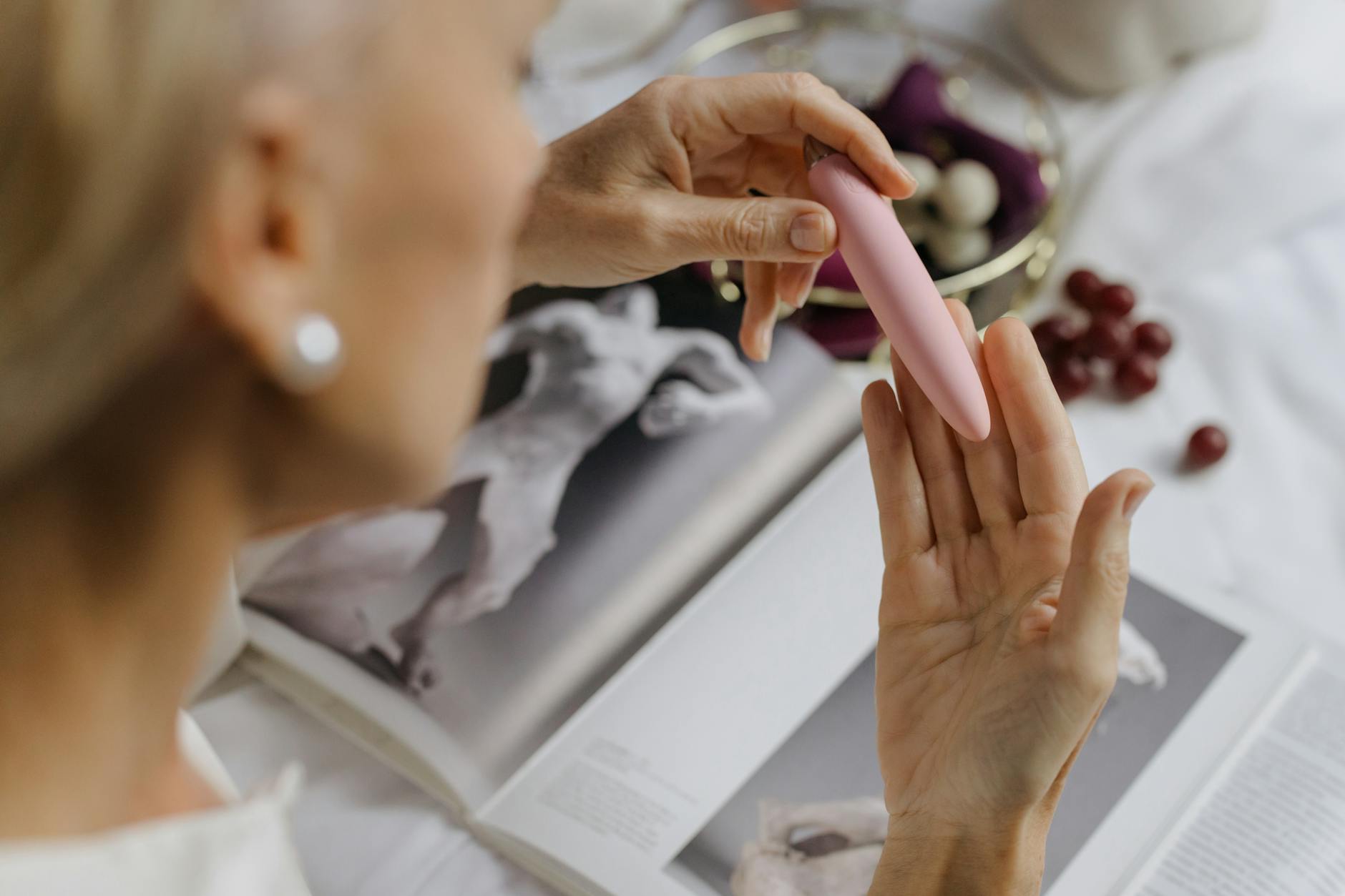
This is where the tool comes in. A lemon vibrator, like the Lem, is not a generic bullet vibrator that you hide in a sock drawer. It's designed, it's intentional, it's beautiful. There's something psychologically different about holding something that was made with care versus something hidden in shame.
The design alone does something: it signals that this is normal. That your pleasure is worth the engineering that went into this. That you deserve a tool that's made well and looks good on your nightstand. That's the opposite of shame.
The sensations help too. The suction mechanism of lemon vibrators is fundamentally different from traditional vibration. It works with your body's natural response rather than against it. You feel less friction, less numbness, more control. When your body responds the way it's supposed to, something shifts psychologically. You're not broken. The tool was just wrong before.
Building a solo pleasure practice when shame is in the room
Start small and intentional. Set aside twenty minutes when you won't be interrupted. Not because you need to rush, but because you're treating this like it matters. Because it does.
Before you even touch yourself, get clear on what you're doing this for. Not to achieve an orgasm (that's pressure). Not to feel less anxious (that's using pleasure as a coping mechanism). Just to experience sensation. To remember that your body can feel good. To practice taking up space and time for yourself without guilt.
When you use the Lem or another lemon vibrator, pay attention to what's different from when you touch yourself manually. Most people find that the suction creates a kind of pleasure that feels less aggressive, more nuanced. You can change patterns, speeds, intensity. You're not passive. You're directing this.
Here's what I tell clients: the goal of solo pleasure isn't always an orgasm. Sometimes it's just the act of choosing yourself. Of saying, "I deserve to feel good today, and I'm not asking permission." That's a completely valid solo pleasure session.
What to do if your partner finds out (spoiler: it's fine)
Many people worry that solo pleasure will threaten their partner. The data says the opposite. People in relationships who have solo pleasure practice typically report higher satisfaction, better communication about desire, and more frequent partnered sex.
If this comes up, you have a choice. You can say, "This is something I do for me, and it makes me feel better in my body." That's a complete sentence. You don't owe explanation beyond that. If your partner is threatened by it, that's something for you two to talk through, and it might be worth working with a couples counselor to untangle where that threat is coming from. But your right to solo pleasure shouldn't be negotiable.
If you want to involve your partner, that's another conversation entirely. Some couples use lemon clitoral vibrators together as part of partnered play. If you're interested in that dynamic, we've covered how to use a lemon vibrator with a partner for better orgasms together.
When shame runs deeper
If you have a history of sexual trauma, religious trauma, or deep shame around your body, this isn't something to white-knuckle through alone. A therapist who specializes in sexual health or EMDR can help you process the messages you carry and build a different relationship with your body.
Lemon sexual toys are tools. They can help. But they work best in combination with the internal work of questioning old beliefs and giving yourself permission. If you find you're using solo pleasure to avoid difficult feelings rather than to genuinely experience pleasure, that's worth exploring with a professional.
The simple truth
Your body belongs to you. Solo pleasure is not selfish, not shameful, and not a sign of anything wrong. It's a sign of self-respect. A lemon clitoral vibrator can be part of reclaiming that—partly because it's a better tool, and partly because choosing one is an act of saying, "My pleasure matters enough to invest in."
The shame is learned. That means it can be unlearned. And when you do, you get access to something most people never fully experience: the simple, uncomplicated experience of your body feeling good on purpose, in broad daylight, without apology.
People also ask
Is using a vibrator on your own normal?
Completely normal. Research shows that 52% of women who are partnered use solo pleasure devices, and the number is higher among people who are single. Solo pleasure is a healthy, common part of sexual development and satisfaction across the lifespan. There's nothing weird or broken about it. If anything, research suggests that people who have a solo pleasure practice report better overall sexual health and satisfaction.
Why do I feel guilty using a vibrator even though I want to?
Guilt about solo pleasure is almost always inherited, not intrinsic. You learned it from cultural messages, religious teaching, family dynamics, or past relationships. Your body doesn't feel guilty about pleasure. Your mind does, because your mind is running old programming. The good news is that you can update the programming by consciously examining those beliefs and choosing different ones. Writing them down and questioning them is the first step.
Can using a lemon vibrator help me feel less ashamed?
Yes, in multiple ways. First, the tool itself signals that your pleasure is worth designing for. Second, lemon vibrators typically work with your body's natural response in a way that feels less mechanical, which helps you stay present instead of dissociated (a common response to shame during solo pleasure). Third, the act of choosing yourself enough to invest in a good tool is a small act of self-respect that compounds over time. It's not magic, but it helps.
What if I have a partner and I want solo pleasure time?
Solo pleasure is not a threat to partnered sex. It's a complement to it. If your partner is resistant, that's worth exploring directly. Often the resistance comes from their own shame or insecurity, not from any actual reason to be threatened. Having that conversation—ideally with a couples therapist if it's charged—can actually deepen intimacy because you're being honest about what you need. And if your partner is supportive, solo pleasure time is a completely reasonable boundary to set.
How do I start using a lemon vibrator if I'm nervous?
Start without the vibration on. Just hold it, let it be part of your space, get used to seeing it. Then use it at the lowest setting, focusing on sensation rather than results. Many people find that lemon vibrators feel less intimidating than traditional vibrators because the sensation is different. If you're still nervous, there's no shame in taking your time. Your comfort matters more than performance.
Does using a vibrator mean I can't orgasm without one?
No. This is a common worry and it's not how bodies work. Using a vibrator doesn't rewire your capacity for pleasure. It just adds another tool to your toolkit. Most people find that solo pleasure with a vibrator actually helps them understand their body better, which translates into better orgasms with partners and without tools. A lemon clitoral vibrator in particular tends to feel more like an extension of your own touch than a replacement for it.
The bottom line
Shame isn't a feature of your body. It's a story someone told you. You can decide whether to keep running that story or to write a new one. Solo pleasure, paired with understanding how to use lemon vibrators when your body feels different, is part of that rewiring. Your pleasure matters. Full stop.
If you're ready to start, we're here. If you have questions, reach out.