Let's be real about the silence
You've been with this person for three months, maybe six. Things feel solid. The sex is good, sometimes great. But there's this thing you know about yourself, this tool that makes your body light up in ways your partner's hand alone can't replicate. And you haven't said a word because the risk of rejection feels bigger than the payoff of better orgasms.
Here's what I've learned from working with couples through this exact moment: the silence causes more damage than the conversation ever will. Not because your partner will reject you, but because you'll spend months contorting yourself into an approximation of pleasure instead of asking for the real thing. That erodes intimacy in ways that have nothing to do with toys.
Why the timing matters more than you think
There's a window. Too early in the relationship and introducing a vibrator can feel like you're saying your partner isn't enough. Too late and it feels like a secret you've been keeping. The sweet spot is usually once the initial novelty has worn off but the relationship still feels new enough that asking for what you want reads as adventurousness instead of critique.
For most couples, that lands somewhere between three and nine months in. By then, you've had enough sex that adding a tool doesn't feel like you're fixing a problem. It just feels like you're expanding the toolkit.
Timing also depends on how you two talk about sex in general. If you're already comfortable naming body parts and asking for what you want during sex, introducing a lemon vibrator is a natural progression. If you've never said the word "clitoris" out loud together, start there first.
The conversation blueprint
Don't have this talk during sex. That's the number one mistake. Sex is not the moment to introduce new information. Have this conversation clothed, ideally not in the bedroom, preferably when you have time to actually discuss it instead of defaulting to action.
Start with vulnerability. "I want to talk about something because you matter to me and our sex life matters to me. I've been thinking about trying something that I know will help me have better orgasms, and I want to do it with you." That framing immediately separates the tool from your partner's adequacy.
Then get specific without being graphic. "I've read a lot about clitoral vibrators, and I want to try one. I'm really interested in exploring this together." If they ask what it does, explain it simply: it uses gentle suction and vibration to stimulate the clitoris in a way that's hard to replicate with a hand or mouth alone. That's not criticism of them. That's just how bodies work.
Expect questions. Some partners get curious. Some get nervous. Some worry it means you're not satisfied, even if you've just explained you are. Listen to that nervousness. It's not about you. It's usually about their own relationship history or insecurity or ideas they've absorbed about what sex "should" be.
What you can't control is their reaction
I'm saying this gently: you cannot negotiate enthusiasm. You can ask for openness. You can ask for a chance to try it. You can't ask someone to feel excited about something they're uncomfortable with.
What you can do is frame it as discovery, not demand. "I'd love to try this together. We can take our time figuring out what feels good. If you hate it, we stop." That removes the pressure of permanent adoption and makes it an experiment instead of a decision.
Some partners will be into it immediately. Some will need time. Some will agree and then feel weird during the actual moment. That's all normal. The goal isn't their enthusiasm. The goal is their willingness to try something that matters to you.
If they refuse outright and won't revisit it, you have useful information about your compatibility. That's not a fun discovery, but it's important.
The actual introduction (when you both say yes)
Don't just show up with a toy. Build anticipation. "I ordered something I want to try. I'm excited about it, and I think you will be too." That gives them mental space to sit with the idea instead of being surprised mid-foreplay.
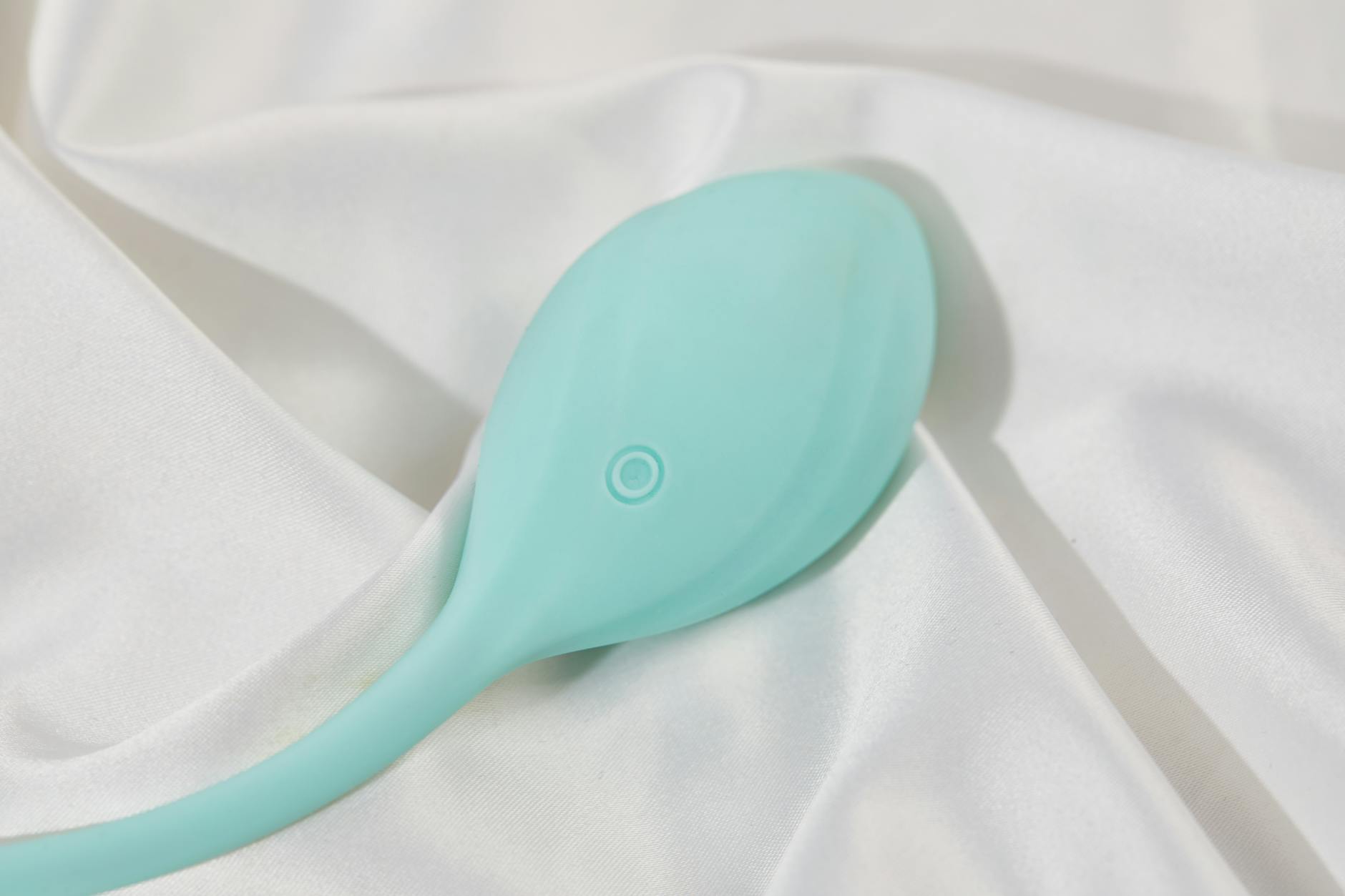
When you're both ready to try it, start slow. Undress normally. Get into your regular foreplay. Then, once you're already aroused, introduce the toy. A clitoral vibrator like the Lem works best when there's already blood flow to the area. The sensation will be more intense if you're already turned on.
Show your partner how it works first, outside the context of sex. Let them hold it, see the pattern options, understand the intensity levels. Demystification kills awkwardness.
When you use it together, you might ask your partner to hold it while you guide them, or you can use it yourself while they're involved in other ways. There's no rule. The point is figuring out what feels good for both of you.
The physics of lemon vibrators with a partner present
Clitoral vibrators, especially suction-based ones like Hello Nancy's lemon toys, work differently than penetrative vibrators. They're not about depth. They're about targeted stimulation of the external clitoris and the thousands of nerve endings there.
Because of that, they actually integrate well into partnered sex. Unlike a penetrative vibrator, which can feel competitive with a partner's involvement, a clitoral vibrator augments what's already happening. You can use it while your partner is penetrating you. You can use it while they're using their mouth or hands elsewhere. It doesn't replace them. It adds precision.
That changes the dynamic. Instead of the toy being a substitute, it becomes a collaboration.
What often surprises couples
First: the orgasm is often different. Not better, necessarily, but different. Some people experience it as more intense. Some experience it as faster. Some experience it as more localized. That's not a problem. It's just data about what your body does with different kinds of stimulation.
Second: seeing your partner have that kind of orgasm can be genuinely hot for them. Watching someone come hard because of something you're doing together often creates a feedback loop where everyone's turned on.
Third: it often becomes a regular part of sex. The awkwardness or novelty wears off after a few times, and then it's just another option in the rotation.
If it doesn't work the first time
Don't abandon ship. The first time using anything new is rarely the best time. You're both self-conscious. You're both hyper-aware of the new thing. That awareness kills arousal.
Try it again. And again if you need to. Most couples find their rhythm with a new toy around the third or fourth time.
If after several tries it's still awkward and neither of you is enjoying it, that's different. Then you have an actual incompatibility that's worth discussing. But one awkward first time isn't failure. It's just the learning curve.
The relationship payoff
Here's what I've observed in my work with couples: introducing something like a lemon vibrator often strengthens the relationship instead of complicating it.
Why? Because you had to be vulnerable. You had to ask for something you wanted. You had to risk rejection. And then your partner either said yes or worked through their own stuff to get there. That's intimacy. That's what builds lasting connection.
The actual orgasms are great. But the thing that matters more is that you stopped pretending and started asking.
If you're in a new relationship and you know a clitoral vibrator would change your sexual experience for the better, you deserve that. The conversation feels scary. The introduction might feel awkward. But six months in, when this is just part of how you two have sex, you'll be glad you had the guts to ask.
Ready to have that conversation? Check out our guide on how to introduce lemon vibrators to your partner without awkwardness for even more tactical language and timing strategies.
Common questions about toys and new relationships
What if my new partner thinks I'm being unfaithful by using a vibrator during sex with them?
This is an insecurity rooted in the idea that toys are cheating. They're not. A vibrator is a tool, like lube or your hand. It doesn't replace your partner. It enhances what you're already doing together. The best way to address this is through education, not reassurance. Show them data on how common vibrators are, how they work, why they're not a threat. If they still can't move past it after you've had a real conversation, you're dealing with a larger trust or insecurity issue that might need a couples therapist to untangle.
How do I know if my partner wants to use a vibrator but is too shy to ask?
You can't read minds, but you can create safety. If you introduce the topic casually ("I've been thinking about trying a clitoral vibrator"), you're signaling that it's okay to talk about. Some partners will take that opening and share their own curiosity. Some won't. But at least you've opened the door.
Is it weird to ask my partner to use a vibrator on me if they have no experience with toys?
Not at all. Show them how it works first. Explain the intensity levels. Let them practice when you're not in the middle of sex so there's less pressure. Most people figure it out quickly. The learning curve is short.
Does using a lemon clitoral vibrator mean my partner won't be able to make me orgasm without it?
No. Your body doesn't become dependent on a toy. You're not rewiring your nervous system. A vibrator just offers a different type of stimulation. You'll still be able to orgasm from other kinds of touch. You'll just also have another option.
What if we try it and my partner gets jealous or resentful?
That's a signal that there's something deeper going on. It might be insecurity about their own sexual skills. It might be ideas they have about what "real" sex should look like. It might be past trauma. A single conversation won't fix it. You might need to work with a couples therapist to explore what the toy is triggering. The toy itself isn't the problem. It's just exposing something that was already there.
How do I bring it up again if my partner shut it down the first time?
Don't push immediately. Give it time. But eventually, if this matters to you, you need to circle back. You might say: "I know you seemed uncomfortable when I brought this up before. I've been thinking about it more, and it's still something I want to try. Can we talk about what made you nervous?" That shifts the conversation from the toy to the actual barrier. Once you understand what's underneath the resistance, you might be able to work through it.
Final thought
New relationships are the place where habits form. If you start this relationship by asking for what you want and your partner responds with curiosity instead of judgment, you're setting a template for the whole partnership. That's worth more than any orgasm, even though you get to have both.
If you're still working up the nerve, our full guide on how to introduce lemon vibrators to your partner without awkwardness breaks down the conversation word by word. Sometimes seeing the exact language makes it feel less terrifying to say out loud.
You deserve pleasure. You deserve to ask for it. And you deserve a partner who wants to help you find it.