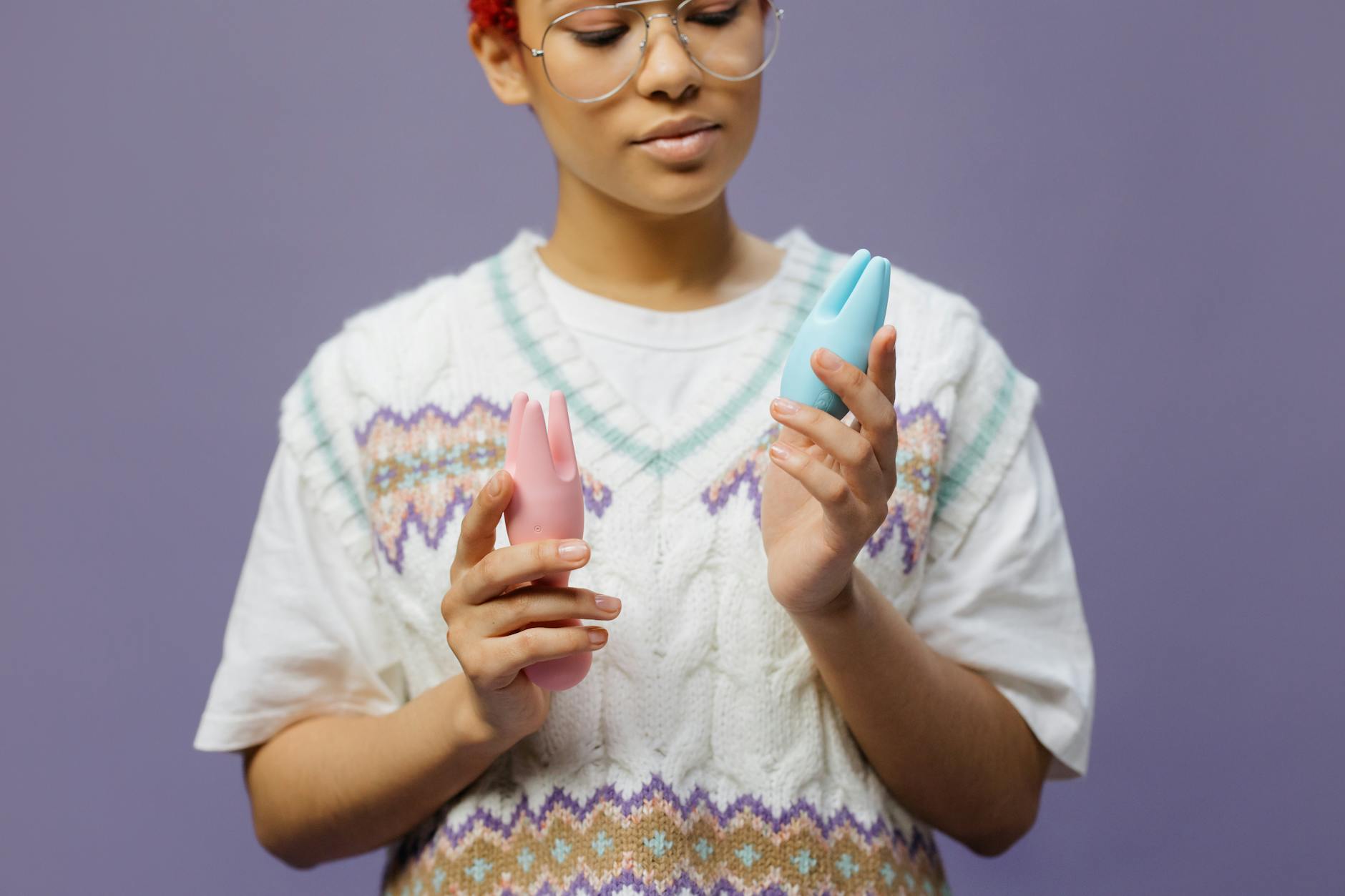
How Lemon Vibrators Improve Pleasure When Hormonal Changes Affect Sensitivity
Your body's response to touch shifts when hormones fluctuate. Here's why lemon clitoral vibrators work better during these transitions, and what to expect.
Let's be real. Hormones don't just affect mood. They fundamentally change how your nervous system responds to touch, how fast arousal builds, and how intensely you feel sensation. When hormonal fluctuations happen, whether from birth control changes, thyroid shifts, or natural cycles, your pleasure response doesn't disappear. It just rewires itself.
The problem is that most people don't know this is happening. They assume something is broken. They blame their partner, blame themselves, blame stress. But the actual culprit is biochemical. And that's actually great news, because it means there's a direct solution.
Estrogen and testosterone both regulate nerve sensitivity in the vulva and clitoris. When these hormones dip or spike, your nerve endings become either less responsive or oversensitive. Arousal that used to take five minutes might now take fifteen. Stimulation that felt perfect before might feel too intense or not quite enough.
Here's the part nobody explains clearly. The clitoral glans (the tip of the clitoris) contains thousands of nerve endings. Hormonal changes don't remove those nerves. They change how easily signals travel through them. Think of it like turning the volume dial on a speaker. The speaker is still there, but the decibels shift.
This happens during:
Birth control transitions (starting, stopping, or switching methods)
Hormonal imbalance from PCOS, endometriosis, or other conditions
Medication side effects that alter hormone metabolism
Natural fluctuations during certain phases of the menstrual cycle
When sensation shifts, a clitoral vibrator that worked perfectly six months ago might suddenly feel wrong. Too buzzy. Too gentle. Too fast. That's not a relationship problem or a personal failure. That's biology asking you to adjust your tools.
Most traditional vibrators use rapid oscillation, which means the toy is physically shaking at high frequency. That's great when nerve sensitivity is stable. But when hormonal changes have made tissue more sensitive or less responsive, rapid vibration can actually feel jarring or inadequate.
Lemon vibrators, particularly the Lem, use air-pulse or suction technology instead. This means the toy creates gentle waves of pressure rather than mechanical buzzing. The sensation is broader, more diffuse, and somehow easier for your nervous system to interpret when hormones have recalibrated how you perceive touch.
The air-pulse mechanism also means you're not relying on direct friction. When hormonal changes have made tissue more delicate or reactive, friction-based toys can feel too sharp. Air-pulse technology distributes sensation across a wider area of the clitoris, which tends to feel more natural and less overwhelming during hormonal transitions.
That's why people often say lemon clitoral vibrators feel "different" during hormonal shifts. Different doesn't mean worse. Often it means finally right again.
When hormones shift, your old pleasure pattern probably won't work anymore. This is where most people get stuck. They try the same toy, the same rhythm, the same timing, and nothing clicks. Then they assume they're broken.
Here's what actually works:
Treat hormonal transitions like you're learning your body again. Because you kind of are. Start with the lowest intensity setting on your lemon vibrator. Spend more time on warm-up than you used to. Let arousal build slowly. Your nervous system needs time to recalibrate to the new hormonal baseline.
If you've never used air-pulse technology before, the adjustment takes a few sessions. Your brain is used to interpreting rapid buzzing as arousal cues. Air-pulse feels different because it is different. By session three or four, most people recognize it as superior, especially during hormonal transitions.
Think of it this way: when your eyes adjust from a bright room to a dark one, you don't panic after five seconds. You wait a minute and then you can see fine. Your nervous system needs the same grace period during hormonal shifts.
When hormones are stable, timing feels flexible. You can have good sex whenever. But during hormonal transitions, timing becomes strategic. Your body's responsiveness varies based on where you are in your cycle, how your new medication is metabolizing, or whether your thyroid is stabilizing.
Pay attention to when arousal feels easiest. Is it morning or evening? Days 1 to 14 of your cycle or days 15 to 28? Two hours after you take your medication or four hours? Start tracking this for a week. You'll find a pattern.
Once you know when your body is most responsive, schedule pleasure during those windows. This isn't unromantic. This is practical. You're working with your hormones, not against them. During those optimal times, your lemon clitoral vibrator will work more effectively because your nervous system is primed to receive the signal.
If you're in a relationship, share this timeline with your partner. "My body feels more responsive around day 10 to 14" gives you both something concrete to work with instead of vague frustration.
Every hormonal system is different, but here's the general timeline. If you've just changed birth control, started or stopped medication, or noticed a hormonal shift, expect four to six weeks before your pleasure response fully stabilizes. During those weeks, sensation will feel inconsistent. Some days will feel normal. Others will feel muted or heightened.
This is not permanent. Your body is recalibrating. Using a lemon vibrator during this period helps because air-pulse technology is more forgiving than traditional vibrators. It adapts to different levels of sensitivity without requiring you to switch tools.
One more thing. If a hormonal change happened three months ago and pleasure still hasn't returned, that's worth discussing with your GP. Sometimes a medication adjustment or a thyroid check reveals what's actually happening. Don't wait and hope. Get checked.
Honestly, the biggest shift when hormones change is mental. You have to let go of what worked before and get curious about what works now. That sounds simple but it's not. Most of us carry a lot of expectations about our bodies.
But here's the thing: your sensitivity shifting isn't a failure. It's your body adapting to new chemistry. And lemon vibrators, with their gentler air-pulse technology, work brilliantly during these transitions because they don't demand the same steady baseline of sensitivity that other toys do.
Give yourself permission to explore. Use your lemon clitoral vibrator differently during hormonal transitions. Start lower. Go slower. Pay attention to what feels good today, not what felt good three months ago. Your pleasure is still there. It just speaks a slightly different language right now.
Estrogen and testosterone both speed up the arousal cascade in your nervous system. When these hormones shift, it takes longer for your brain and body to build that feedback loop. This is temporary. Once your new hormonal baseline stabilizes, arousal speed usually returns to normal, though it might feel different than before.
You can use your old vibrator, but you might need to adjust how you use it. Try lower intensity, longer warm-up, and different timing. Many people find that adding a lemon vibrator gives them more options without abandoning tools they love. Having variety is actually helpful during hormonal shifts because different days feel different.
Track it alongside your cycle, medication changes, or other hormonal events. If sensitivity shifts at the same time as a birth control change, thyroid diagnosis, or medication adjustment, hormones are almost certainly the culprit. If sensitivity changes without any obvious hormonal trigger, it's worth mentioning to your GP. Neurological conditions, medication side effects, or relationship stress can also affect sensation.
Yes. Air-pulse creates a wave of pressure rather than physical oscillation. Most people describe it as gentler and more diffuse. During hormonal transitions when sensitivity is unpredictable, this difference is significant. Some days it feels more natural. It also tends to create easier orgasms, which matters when arousal is already slower.
Completely normal. Your body's arousal response is neurochemical. Change the chemistry and you change how sensation registers. It feels jarring because you're used to one baseline. But this isn't a sign something is wrong. It's evidence that your body is responding exactly as designed to a new hormonal environment.
Yes. If you're with a partner, sharing what's happening removes a lot of invisible pressure. "My hormones shifted so my body needs more warm-up time" explains something concrete instead of leaving your partner guessing or blaming themselves. Most partners respond well to specific, clear information.
Hormonal shifts feel disruptive until you understand what's actually happening. Once you do, they're just a normal part of how bodies work. Lemon vibrators help bridge that gap because their air-pulse technology works better during periods of inconsistent sensitivity.
The key is patience with yourself and a willingness to experiment. Your pleasure didn't disappear. It evolved. And with the right tools and the right timeline, it comes back stronger than before.