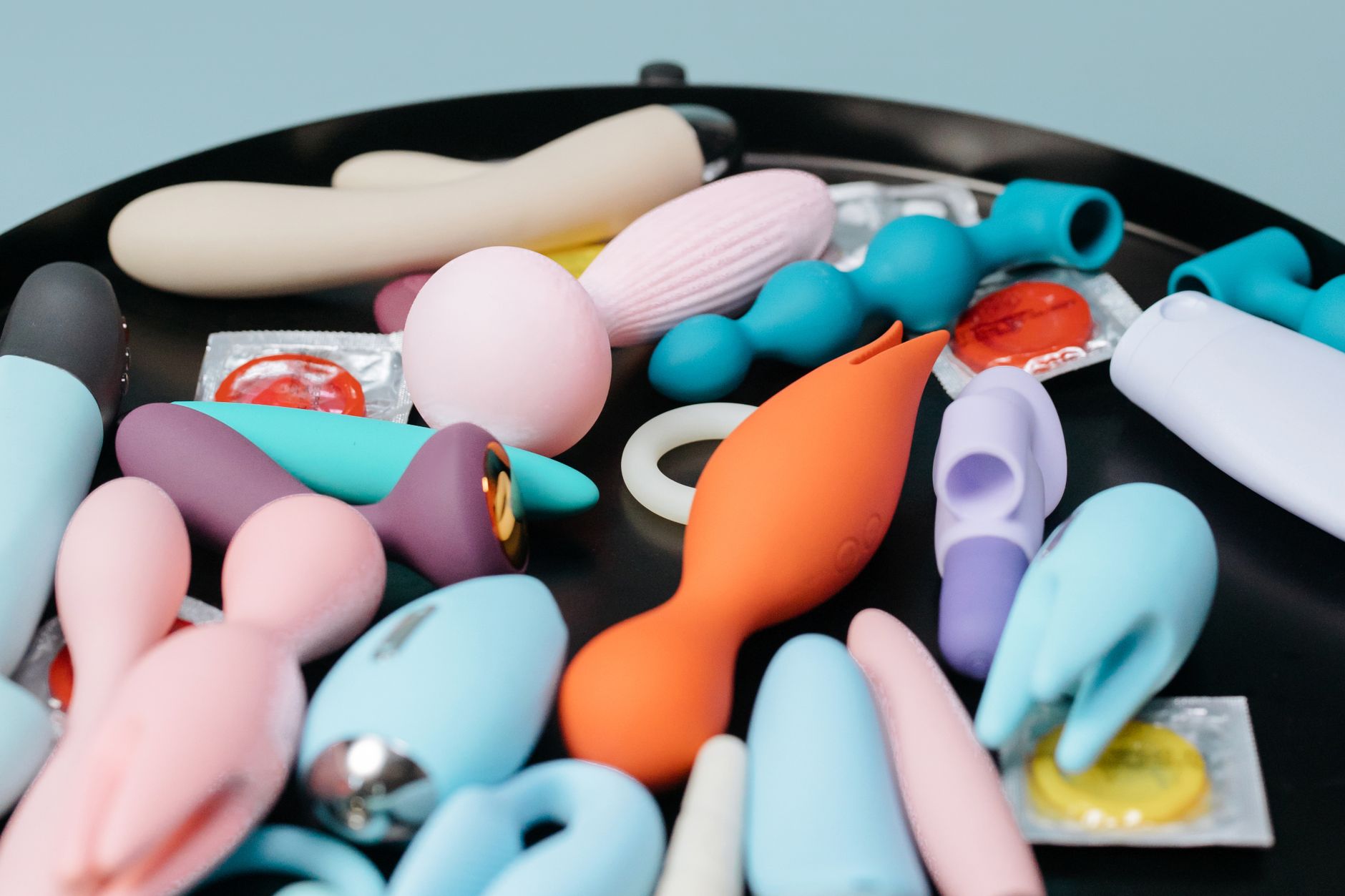
Postpartum bodies are not the same bodies that gave birth
Let's be real: nobody tells you that sensitivity changes after birth. Your OB checks the tear, clears you for "intercourse," and then you're supposed to just pick up where you left off. Except your vulva doesn't feel like your vulva anymore. Your pelvic floor is confused. Your hormones are doing chaos. And if you had an epidural or spinal block, nerve sensitivity can take months to fully normalize.
This is not a failure. This is biology. And understanding what's actually happening makes the difference between forcing yourself through pain and reconnecting with pleasure on your own timeline.
What physically changes in the first 6-12 weeks
The postpartum period is broken into three overlapping phases, and sensation shifts in each one.
Immediate recovery (weeks 1-4). Swelling peaks around day 3-5, then gradually subsides. If you had a vaginal tear or episiotomy, scar tissue is forming. Stitches are dissolving. The skin is hypersensitive to touch. This is not the time for vibrators of any kind, including clitoral vibrators. Your body is in repair mode.
Early healing (weeks 4-8). Swelling continues to decrease. Scar tissue firms up. Hormones drop sharply if you're not breastfeeding, or stay elevated but chaotic if you are. Many people describe the sensation as "numb" or "foreign." This is partly swelling still present, partly the nervous system recalibrating. For some, touch feels too intense. For others, sensation is muted.
Later healing (weeks 8-12). Most clinical healing is complete, though deep tissue remodeling continues. Sensitivity begins to normalize. If you're cleared by your provider for sexual activity (the standard medical checkpoint), this is when conversations about lemon vibrators and clitoral stimulation make sense.
But cleared for penetration doesn't mean cleared for pleasure. Those are different timelines.
Why sensation feels different (and what that actually means)
Three things reshape how your clitoris and vulva register sensation:
1. Nerve recovery takes longer than tissue healing. If you had an epidural or spinal block, nerves were temporarily blocked. As the medication wears off, sensation returns unevenly. Some areas feel hypersensitive (almost painful to touch). Others feel muted. This mosaic of sensation can last 2-3 months, sometimes longer. Your lemon vibrator will feel completely different on day 10 than it does on week 12.
2. Hormonal shift rewires what feels good. Estrogen and progesterone drop dramatically in the first two weeks postpartum. If you're breastfeeding, they stay low. If you're not, they climb back slowly. Lower estrogen means thinner vulvar tissue, less natural lubrication, and sometimes a delay in arousal. Your body isn't broken. It's adjusting to a totally different chemical environment.
3. Pelvic floor tension changes the whole map. Pregnancy and birth load the pelvic floor with months of strain. Labor stretches it. Recovery tightens it (as a protective reflex). A chronically tense pelvic floor makes the clitoris harder to access and sensation less clear. You might feel nothing, or everything at maximum volume. Finding the middle ground takes time.
When it's actually safe to use clitoral vibrators
Medical clearance (usually week 6) is not the same as pelvic floor readiness. Here's a better framework:
Week 6 checkpoint. You've been cleared by your provider for sexual activity. Visible tears have healed. Lochia (postpartum bleeding) has stopped. But your pelvic floor might still be in protective mode.
Week 8-10 reality check. This is often when sensation starts normalizing and people feel emotionally ready to explore pleasure again. Many find this is a more honest starting point than the six-week marker.
Your personal readiness matters more than any timeline. If penetration feels fine but clitoral touch feels strange or painful, pause. If you're still experiencing sharp pain or heaviness, wait. Your nervous system will tell you when it's ready.
Start with external touch. No vibrator. Just your hands or your partner's hands, with plenty of lubricant. Let sensation map itself. Once external touch feels good (not just tolerated, but actually pleasurable), lemon vibrators become an option.
How to introduce lemon vibrators safely in postpartum recovery
If you're thinking about reconnecting with pleasure using air-pulse lemon vibrators or any clitoral vibrator, here's a pathway that actually works:
Start at the lowest setting. Postpartum tissue is more sensitive to vibration intensity. If you used a lemon vibrator before pregnancy and loved pattern 5, pattern 1 might be the right place to start now. Your nerve recovery timeline is individual.
Use water-based lubricant, always. Lower estrogen means less natural lubrication. This isn't optional. Lubricant protects healing tissue and makes the vibrator feel better.
Keep sessions short. Five to ten minutes is plenty. You're gathering information about sensation, not chasing an orgasm. If you overdo it, you might experience soreness that makes you think something's wrong. (It's not. You just overdid it.)
Touch your vulva gently first. Before the vibrator, spend a minute just getting reacquainted with how your own vulva feels to your own hands. Swelling has subsided. Scars are forming. Sensation is returning. Notice what you notice without judgment.
Involve your partner thoughtfully. If you have one, tell them specifically what feels good and what doesn't. "Slower," "less pressure," "that spot." Postpartum recovery is emotionally loaded enough without also managing a partner's feelings about changed sensation. How to introduce lemon vibrators to your partner without awkwardness has concrete language for these conversations.
The pelvic floor piece nobody emphasizes enough
Your pelvic floor works overtime during pregnancy and labor. In the early postpartum period, it's often locked tight as a protective reflex. Tight pelvic floor muscles reduce sensation and make pleasure feel distant or blocked.
Kegels sound like the obvious answer. Don't start there.
Start with learning to relax your pelvic floor. Deep breathing, gentle stretching, safe slow movement. Your pelvic floor has been gripping for months. It needs permission to unclench before strengthening makes sense.
Once you can access relaxation, gentle Kegels (not aggressive squeezing) help recalibrate sensation and support the healing process. By week 10-12, your pelvic floor often feels more cooperative and sensation feels clearer.
Psychological dimensions of postpartum pleasure
Here's the part that matters as much as the physical recovery: your brain is in a completely different place.
You've spent nine months protecting a pregnancy. Your body was no longer fully your own. Now it's yours again, but it looks different. If you had a traumatic birth, your body might feel unsafe. If you're sleep-deprived (which you are), your nervous system is in overdrive.
Adding vibrators or expecting yourself to want sex on someone else's timeline creates pressure that works against pleasure.
The most healing approach is slow. Permission-based. Curious rather than goal-oriented. You're not trying to "get back to normal." You're meeting your new postpartum body where it actually is and building pleasure from there.
What to expect as recovery progresses
Byween weeks 12-24, most people report that sensation feels substantially closer to pre-pregnancy baseline. Swelling is gone. Scar tissue has matured. Hormones have stabilized or normalized (if not breastfeeding) or found a new baseline (if breastfeeding).
This is often when lemon vibrators start feeling genuinely pleasurable rather than foreign. Pelvic floor tone settles. Arousal builds more predictably. Sex and self-pleasure stop feeling like rehabilitation and start feeling like, well, pleasure.
But this timeline is individual. Some people feel ready at week 8. Others need six months. Neither is wrong.
FAQ
Can I use a lemon vibrator while lochia is still present?
No. Wait until postpartum bleeding has stopped completely. Lochia is your body clearing the uterine lining. Introducing vibration risks infection and disrupts the healing process. This typically takes 4-6 weeks, sometimes longer.
What if touching my vulva during recovery feels painful?
Talk to your provider. Sharp pain isn't normal. Hypersensitivity (everything feels too intense) is common and often resolves with time. True pain might indicate a tear that wasn't fully assessed, infection, or scar tissue forming in a way that's creating tension. These are all fixable, but they need professional attention.
Is it normal that my sensitivity feels completely numb?
Yes, especially if you had an epidural or spinal block. Nerve recovery is slow and often uneven. The numbness usually improves significantly by week 12, though some people report subtle changes lasting 6+ months. If numbness is complete and shows zero improvement by week 16, mention it to your provider.
Can I use a lemon clitoral vibrator if I'm breastfeeding?
Yes, once you're cleared for sexual activity and your pelvic floor feels ready. Breastfeeding does suppress estrogen, which might mean you need more lubrication and should start at lower intensity settings. The vibrator itself has no impact on milk supply.
Will my sensitivity come back to the way it was pre-pregnancy?
Often yes, by 6-12 months. Sometimes it's different in interesting ways. Pregnancy and birth change nerve pathways, hormonal responses, and pelvic floor sensation. For many people, this means deeper, more localized pleasure rather than surface stimulation. For others, arousal takes longer to build. Change isn't loss. It's just different.
What if I don't feel ready for pleasure at week 6 or week 12?
Trust that. Postpartum recovery is not a race. Pressure to want sex before you actually want it creates the opposite of pleasure. Your body and brain will signal readiness. In the meantime, nonsexual touch, time with your partner if you have one, and gentle self-compassion matter more than any vibrator. If you're consistently avoiding all sexual touch beyond week 16 and this feels like a problem in your relationship, talking to a couples therapist might help you figure out whether this is normal recovery or something worth exploring.
The real truth about postpartum pleasure
Your body just did something extraordinary. Recovery takes time. Sensation shifts. Pleasure changes shape. Lemon vibrators and clitoral vibrators absolutely belong in the postpartum landscape, but only when you are ready, not when anyone else thinks you should be.
Start slowly. Use lubricant. Listen to your own body. Talk to your partner if you have one. And know that reconnecting with pleasure after birth is not about getting back to the person you were. It's about meeting the person you are now and discovering what feels good in this new configuration.
If you have questions about your recovery or want personalized guidance, reach out to Hello Nancy. We're here to help you navigate this transition.